
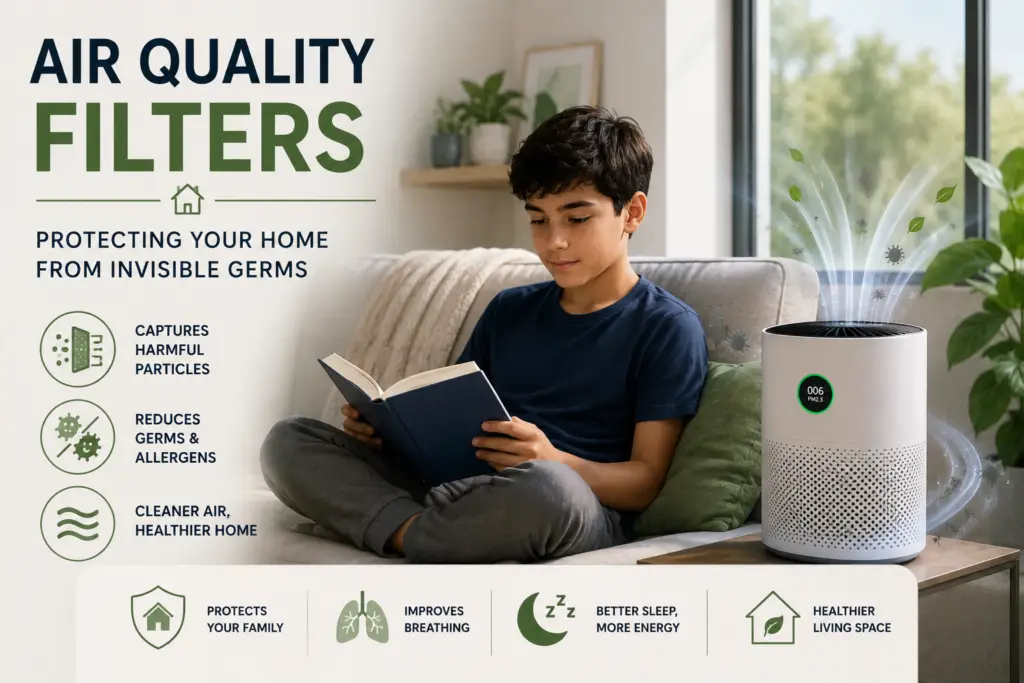
We spend a large portion of our modern lives indoors. We worry about washing our hands with soap, using sanitizer, and wiping down our kitchen counters to stop germs from spreading.
However, we often forget about the invisible threats floating right in front of our faces. Airborne viruses, bacteria, dust mites, pollen, and mold spores drift through our rooms constantly.
Improving your indoor air quality is a vital step for infection control. It protects your lungs, reduces cellular stress, and prevents common respiratory illnesses from taking hold.
1. The Airborne Path: How Viruses Spread Indoors
When someone coughs, sneezes, or even talks, they release tiny moisture droplets into the surrounding air. Large droplets are heavy and fall to the floor quickly. But tiny droplets, called aerosols, are incredibly light. They can float in the air for hours at a time.
In a closed room with poor airflow, these viral particles build up like smoke.
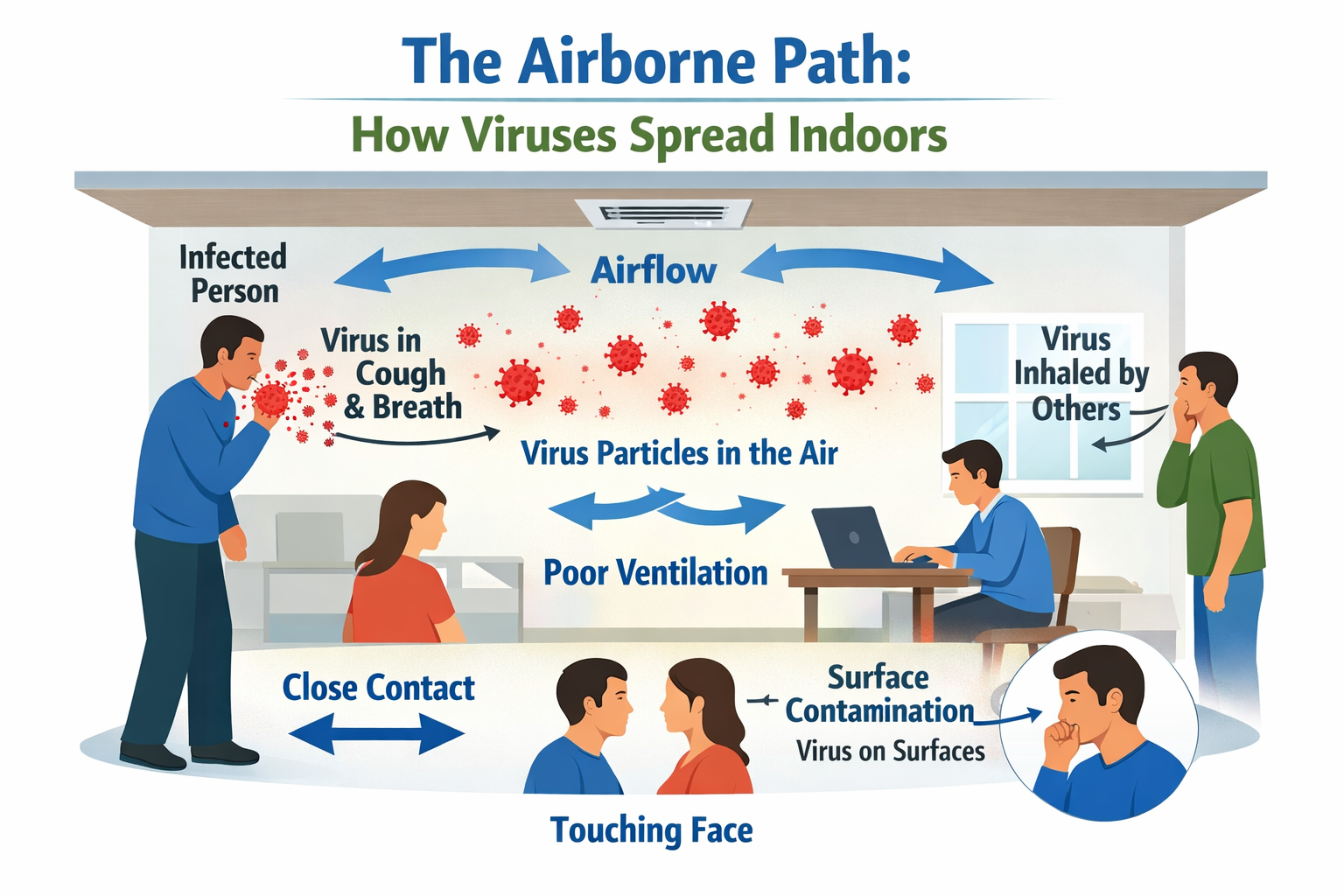
If you sit in this trapped air, your risk of catching an infection rises significantly. This is why respiratory sickness spreads so easily during the winter months when windows stay completely shut. Your home simply recirculates the same stale, germ-heavy air.
2. Understanding Modern Air Filtration Systems
To clean your air effectively, you must understand the technology behind modern filters. Not all air filters are built the same way.
The Power of True HEPA Filters
HEPA stands for High-Efficiency Particulate Air. A True HEPA filter is made from a dense mat of tiny fiberglass fibers. These fibers form a complex maze. When air passes through, the filter traps microscopic particles down to 0.3 microns in size. This includes dust, mold spores, pet dander, and even bacterial or viral droplets. Standard cheap air filters only catch large dust bunnies, leaving tiny germs floating freely in your room.
Why Ionizers and Ozone Generators Are Risky
Some air purifiers use electronic ions to clear the air. These devices charge air particles so they stick to walls or furniture. However, many of these machines produce a gas called ozone as a byproduct. Ozone can irritate your lungs, worsen asthma, and damage your airways over time. Stick to mechanical, physical HEPA filters for clean safety.
Is Your Indoor Air Dirty?
Check your home for these three common signs of poor air quality:
Morning Stuffiness: You wake up every single morning with a dry throat, a stuffed nose, or mild coughing that disappears once you step outside.
The Rapid Dust Build-up: You notice a thick layer of grey dust on your tables, TV screen, and shelves just a few days after cleaning them.
Lingering Smells: Cooking odors, pet scents, or damp smells trap inside your rooms and do not disappear for hours, showing a lack of air exchange.
Simple Solutions for Cleaner Air
Dietary Support for Your Lungs
Eat Anti-Inflammatory Fruits: Berries, citrus fruits, tomatoes, and leafy greens are high in natural antioxidants and Vitamin C. They help protect your delicate lung tissues from airborne irritation and chemical pollutants.
Drink Warm Green Tea: Green tea contains natural plant compounds called catechins. These compounds help soothe your airways, reduce respiratory muscle spasms, and support your body’s natural immune barriers.
Home Remedies for Pure Air
Open Windows Daily for Air Exchange: The easiest solution is completely free. Open your windows for just 10 to 15 minutes every single morning. This creates a powerful cross-breeze that flushes out trapped germs and replaces them with clean outdoor air.
Run a HEPA Purifier in High-Risk Zones: Place a portable air purifier with a True HEPA filter in your bedroom or your home office desk space. Run it on a low, continuous setting to keep the air moving through the filter mat while you sleep or work.

Complete Home Ventilation Protocol
Follow this simple guide to maintain clean air across changing seasons: