

We often hear that we need to drink plenty of water to keep our skin clear or maintain our energy. While those benefits are true, proper hydration plays an even bigger role in basic infection control.
Your body relies on a constant flow of clean water to run its natural filtration systems.
When you drink enough fluid, you keep your kidneys, your lymphatic system, and your breathing passages working at their absolute best. Keeping these channels flushed is an easy, highly effective way to prevent harmful toxins and germs from settling inside your body.
1. The Flushing System: How Water Protects Your Kidneys
Your kidneys act as the primary filtration plants for your bloodstream. They work constantly to strain out waste products, excess salts, and cellular toxins from your blood.
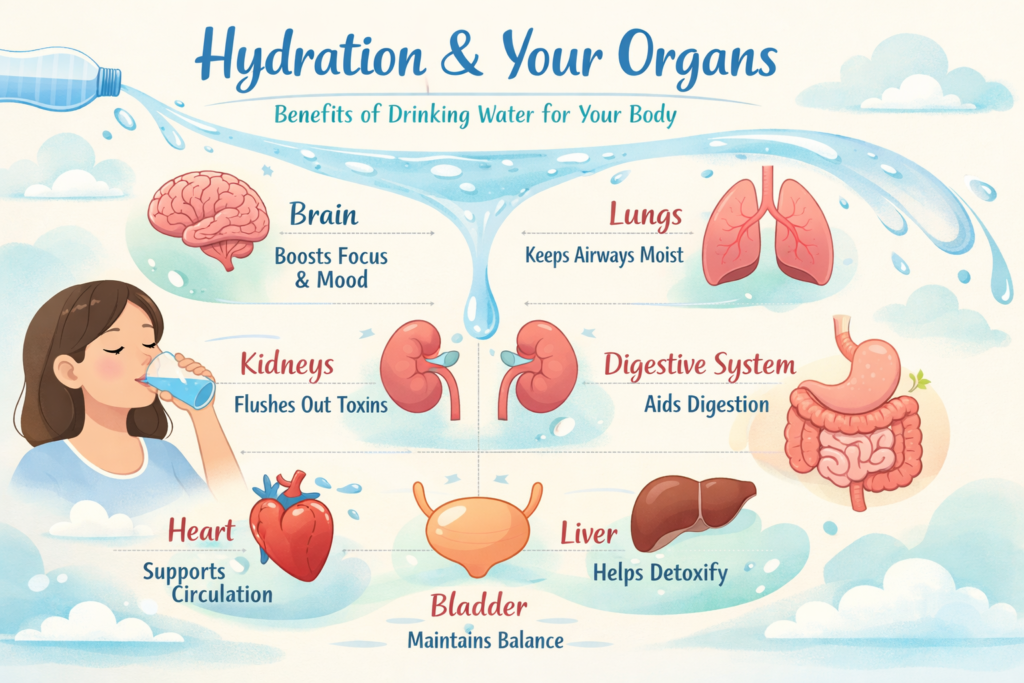
To clear these waste products out, your kidneys need a steady supply of water to create urine.
If you become dehydrated, your body tries to save water by slowing down urine production. This causes metabolic waste products to sit inside your urinary tract for much longer periods. Over time, this stagnant environment allows bacteria to multiply easily, raising your risk of uncomfortable urinary tract infections or painful kidney stones.
2. The Waste Highway: Understanding Lymphatic Flow
Your body features a secondary circulatory system called the lymphatic system. This network consists of tiny vessels and fluid channels that collect waste products from your cells.
The Fluid Movement
Unlike your bloodstream, which uses your heart to pump blood around, your lymphatic system does not have a central pump. It relies entirely on physical body movement and high hydration levels to keep its fluid moving along the channels.
The Filter Stations
The lymphatic fluid passes through small filter stations called lymph nodes. These nodes contain specialized white blood cells that catch and destroy invading viruses. If you are dehydrated, this fluid becomes thick and slow. Waste products stall inside your tissues, which can leave you feeling sluggish and heavy.
The Hydration Status Checklist
Check your body’s water balance throughout the day using these three simple indicators:
The Urine Color Test: Your urine appears dark yellow or amber in color, showing that your kidneys are struggling to dilute internal waste products.
A Frequent Dry Mouth: You experience a sticky, dry feeling in your mouth or a mild, persistent headache that builds up by the afternoon.
A Sluggish Digestion: You experience regular constipation or hard stools, showing that your large intestine is drawing water out of your food waste to keep your organs running.
Easy Ways to Stay Hydrated for Infection Control
Refreshing Hydration Swaps
Eat High-Water Fruits and Vegetables: You do not have to get all your water from a cup. Add hydrating foods like fresh cucumbers, watermelon, strawberries, celery, and zucchini to your weekly grocery list.
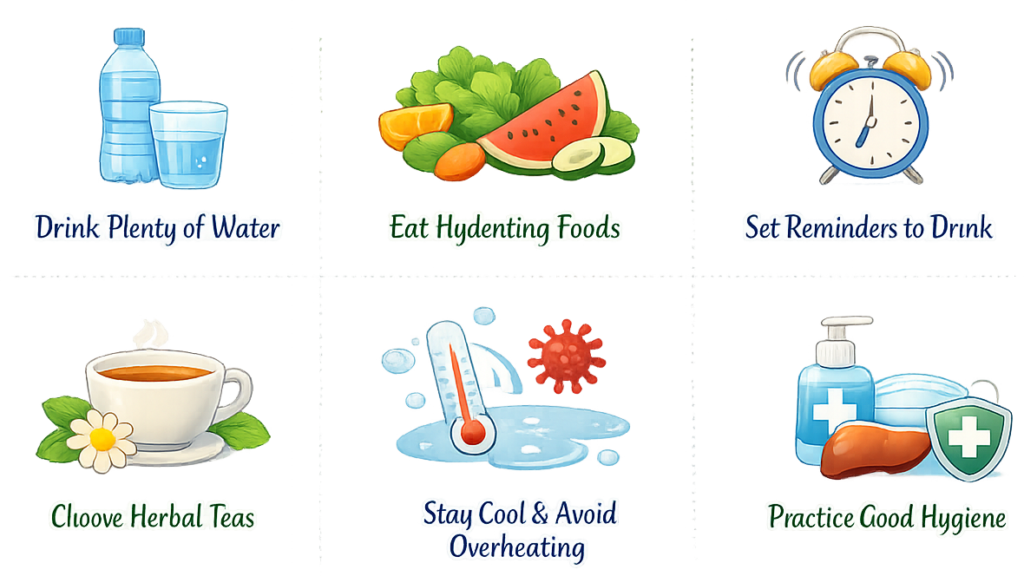
Use Real Electrolyte Boosters: Plain water needs minerals to enter your cells efficiently. Add a tiny pinch of clean sea salt or a squeeze of fresh lemon juice to your water bottle to help your body absorb fluid quickly.
Daily Hydration Rules for Busy Schedules
The Morning Glass Habit: Drink a full glass of room-temperature water immediately after you wake up. Your body naturally loses fluid overnight through breathing, so refreshing your system early keeps your filters clean.
Keep a Glass on Your Workspace: Place a reusable water bottle or glass directly on your desk while you work. Taking small sips throughout the day is much more effective than chugging a large amount of water all at once.