
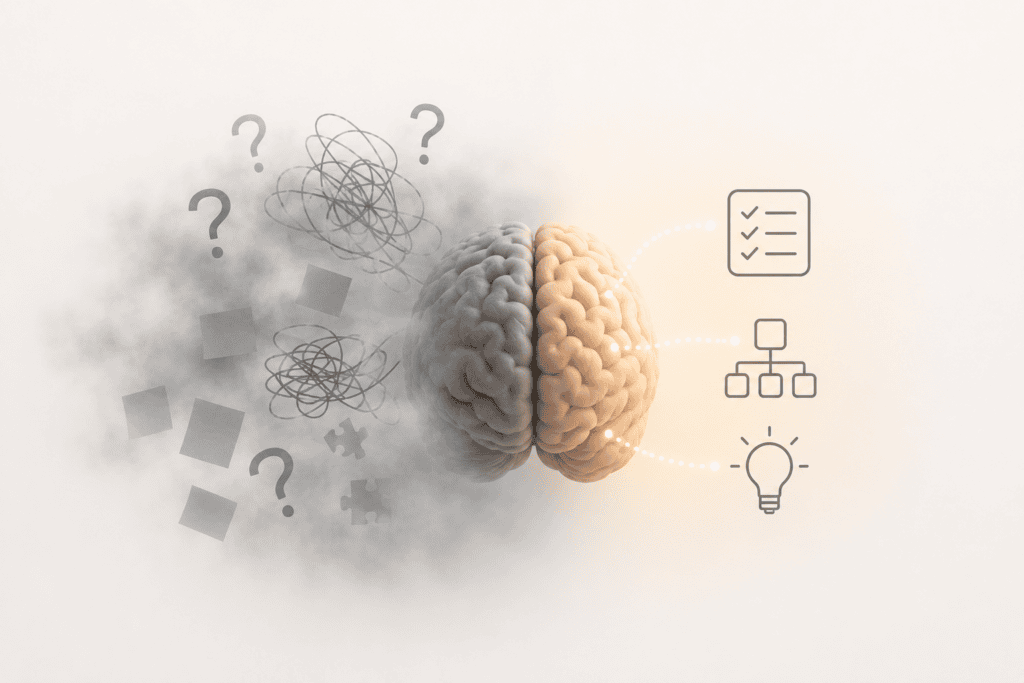
We have all had days where we stare blankly at a computer screen, unable to start a simple task. Usually, we laugh it off as “brain fog” or assume we just need another cup of coffee.
But when that mental wall becomes a daily hurdle, it might be something deeper than simple fatigue.
There is a major difference between a tired brain and a system struggling with executive dysfunction. Understanding how your brain handles planning and execution is the first step toward working with your mind instead of constantly fighting against it.
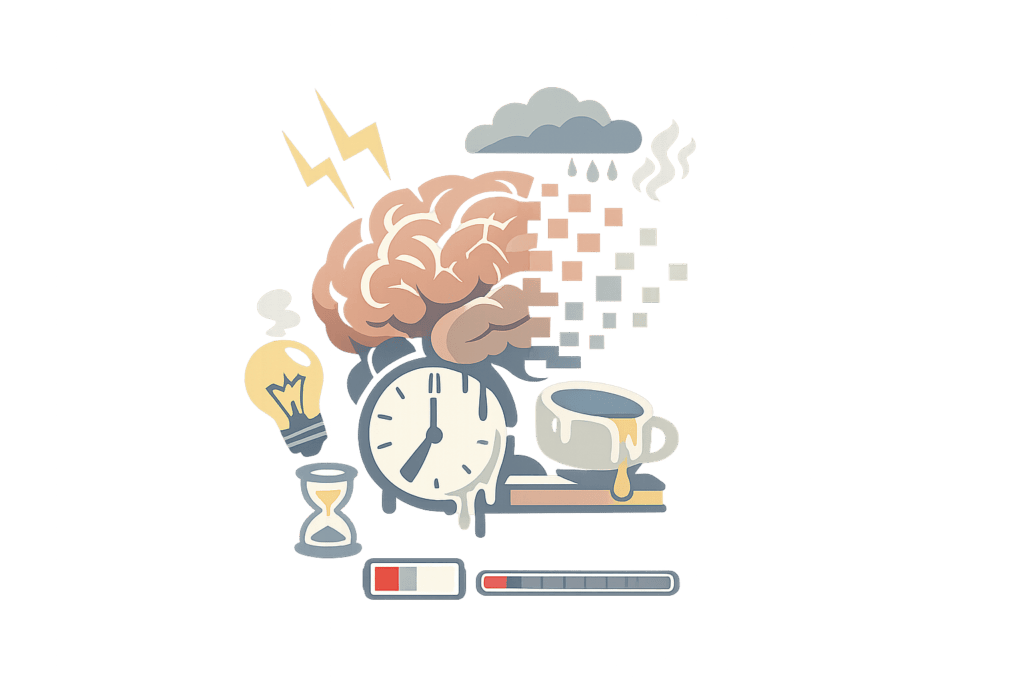
1. The Brain’s Project Manager: What Is Executive Function?
To understand this mental friction, picture your brain as a busy development studio. Executive function is the lead project manager.
The Manager’s Daily Tasks
In a smoothly running system, this project manager handles several specific jobs:
Task Initiation: Deciding to start a task and actually moving your body to do it.
Working Memory: Holding onto information while you are in the middle of a multi-step project.
Inhibition Control: Blocking out distractions, like checking your phone every two minutes.
When the Manager Walks Out
When someone experiences executive dysfunction, the project manager goes completely offline. It is not a lack of willpower or laziness. You know exactly what you need to do, and you might even want to do it desperately, but the brain’s internal signaling system fails to send the “start” command to your focus centers.
2. The Dopamine Connection: Why Some Tasks Feel Impossible
Executive dysfunction is heavily tied to how your brain processes a specific chemical messenger: dopamine.
The Reward Gate
Dopamine is the chemical that creates anticipation and motivation. In neurotypical brains, simple everyday tasks—like updating a spreadsheet, answering an email, or cleaning a desk—trigger a small, steady release of dopamine. This minor reward keeps the brain engaged enough to finish the job.
The All-or-Nothing Focus
For neurodivergent brains, especially those with ADHD, baseline dopamine levels are naturally lower. If a task is not intensely interesting, highly urgent, or completely novel, the brain refuses to track it. The chemical signal to move forward simply isn’t there, turning a basic 10-minute task into an agonizing, hours-long struggle.
The Executive Dysfunction Self-Screening Checklist
Watch out for these three subtle patterns that indicate your brain’s internal project manager is struggling to keep up:
The “Waiting Mode” Paralysis: If you have an appointment or a meeting at 3:00 PM, you find yourself completely unable to do any meaningful work all morning because your brain is stuck in “waiting mode.”
Losing the Thread Mid-Task: You walk into a room or open a browser tab to do a specific chore, get distracted by one minor visual cue, and completely forget what you were doing two seconds later.
The Overwhelming Stack: Looking at a project with multiple steps makes your mind completely freeze up, because your brain cannot figure out how to organize or prioritize the first step.
Simple Daily Adjustments to Bypass Mental Walls
Smart Food Choices for Neurotransmitter Support
Prioritize Tyrosine-Rich Foods: Your body uses the amino acid tyrosine as a direct building block for dopamine. Keep your system supplied by including pasture-raised eggs, lean beef, pumpkin seeds, and avocados in your meals.

Watch the Sugar Crashes: Avoid high-sugar snacks during your working hours. Sharp insulin spikes wreck your steady focus and leave your brain feeling even more starved for chemical stimulation an hour later.
Practical Workflow Habits
Use the “Micro-Step” Method: When a project causes your brain to freeze, stop trying to do the whole task. Write down the smallest physical action possible. Instead of writing “Fix application error,” write “Open the project folder.” Once the body moves, the brain often follows.
Create External Urgency: If your brain ignores tasks without deadlines, create artificial boundaries. Set a loud timer for exactly 15 minutes and challenge yourself to finish just one specific sub-task before the alarm sounds.