The moment someone is told they have high blood pressure, their kitchen undergoes a sudden, disappointing transformation. The salt shaker is hidden away, meals become completely tasteless, and eating feels like a chore.
But lowering your blood pressure is not just about eating bland, boiled food.
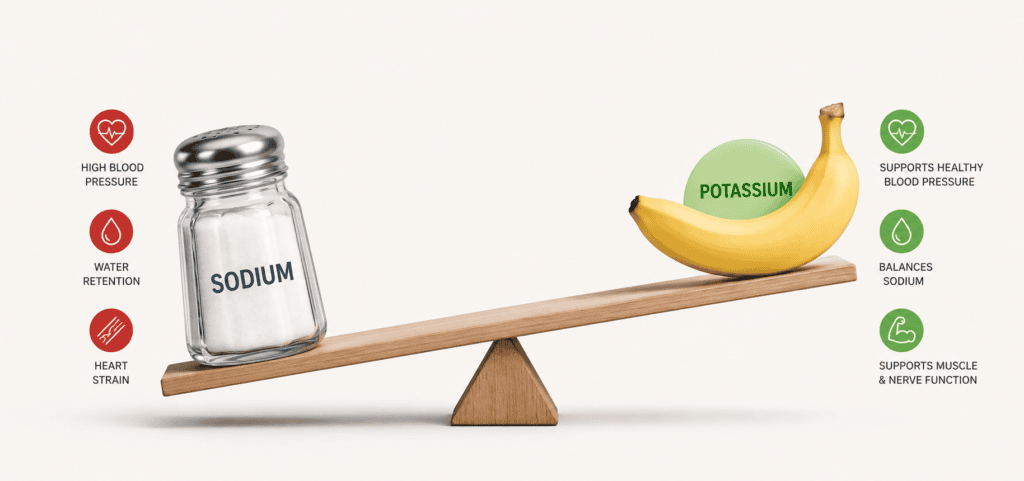
The real secret to healthy blood pressure lies in a simple mineral balance. It is like a see-saw game between two everyday minerals: sodium (salt) and potassium.
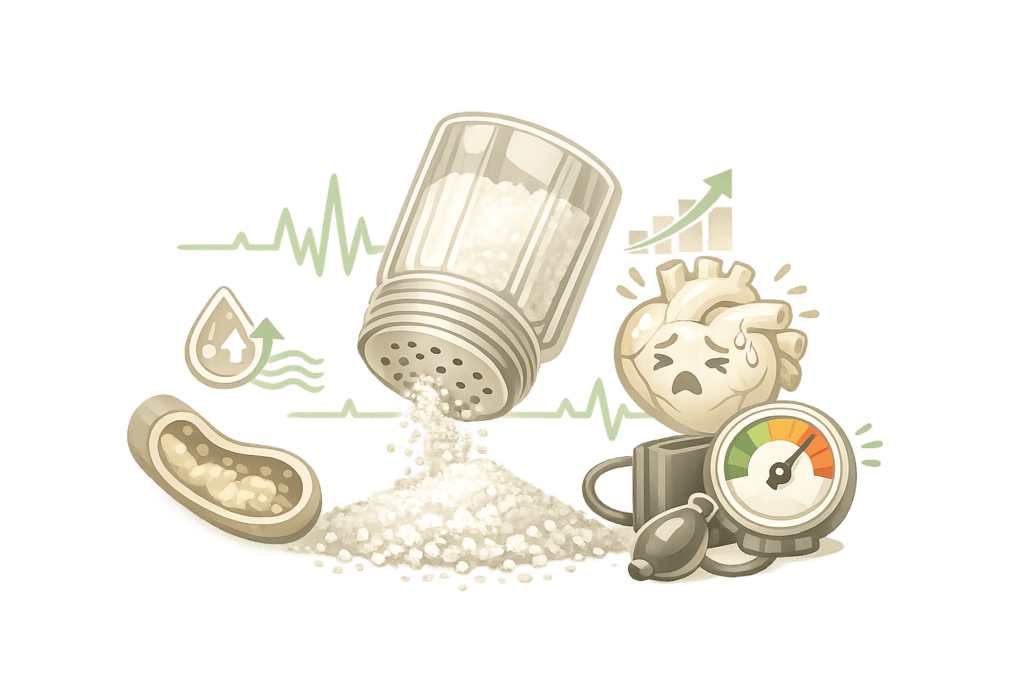
1. The Fluid Balance: How Salt Traps Water in Your Body
To understand why salt raises blood pressure, you have to look at how your kidneys manage fluids.
The Salt Sponge
Sodium acts like a physical sponge inside your body. It loves water. When you eat a heavy meal loaded with salt—like potato chips, processed deli meats, or restaurant take-out—your blood absorbs all that sodium.
The Overloaded Vessels
To dilute this extra salt, your body holds onto extra water instead of flushing it out. This extra water enters your bloodstream directly. Think of it like forcing two gallons of water into a hose designed to hold only one. The pressure on the walls of your blood vessels shoots up instantly.
2. The See-Saw: Why Potassium Is Your Best Friend
Most people focus entirely on cutting down salt, but they completely forget about the other half of the see-saw: potassium.
Balancing the Sponge
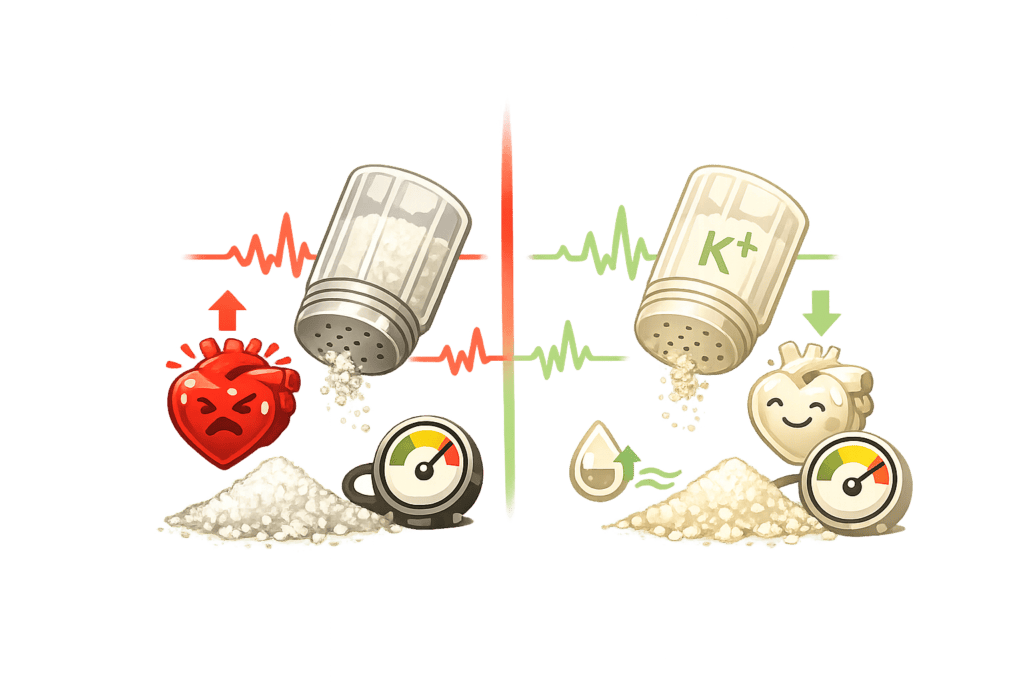
If sodium traps water inside your blood, potassium does the exact opposite. It relaxes the walls of your blood vessels and signals your kidneys to pull extra sodium and water out of your blood and dump it into your urine.
The Modern Diet Problem
The typical Western diet is full of processed, packaged foods which have incredibly high sodium but almost zero potassium. When we eat like this, the see-saw stays tilted completely toward high blood pressure. By simply eating more natural, potassium-rich foods, you can naturally balance out the salt you eat.
The Salt Overload Self-Checklist
Watch out for these three physical signs that your diet has too much sodium and not enough potassium:
Swollen Ankles and Feet: At the end of the day, your feet look puffy, or your socks leave deep, red elastic marks on your ankles because of water retention.
Tight Rings on Your Fingers: You find it difficult to slip your rings off your fingers in the morning, showing that your body is holding onto excess water overnight.
Constant Cravings for Salty Foods: You find plain, whole foods completely unappealing and constantly reach for extra salt, snacks, or sauces to finish your meals.
Simple Kitchen Changes to Balance the See-Saw
Smart Food Swaps for Better Mineral Balance
Try Potassium-Based Salt Alternatives: Talk to your doctor about switching to a low-sodium salt alternative. Many of these use potassium chloride, which helps you get the salty taste with much less sodium.
Drink Fresh Coconut Water: Skip the sugary sodas and sports drinks. A glass of unsweetened coconut water is one of the richest natural sources of potassium available, and it actively helps lower BP.
Add Spinach and Avocados to Your Plate: These whole foods are incredibly high in potassium and magnesium, which help relax your blood vessels naturally.
Easy Daily Habits
Rinse Canned Beans and Veggies: If you use canned black beans, chickpeas, or vegetables, rinse them thoroughly under cold tap water before cooking. This simple step washes away up to 40% of the preserving sodium.
Keep the Salt Shaker in the Cabinet: If the salt is right in front of you on the dining table, you will instinctively sprinkle more on your food. Keep it tucked away.