Reaching the final stretch of pregnancy is a monumental milestone, but the sudden, heavy return of exhaustion during the third trimester can catch many expecting mothers off guard. While first-trimester fatigue is largely driven by a massive surge in progesterone, third-trimester fatigue is a combination of physical demand, structural shifts, and severe sleep disruption.
Managing this final phase requires moving away from intense physical exertion and adopting a strategy of gentle preservation and deep physical recovery.
Why the Exhaustion Multiplies in the Final Weeks
By the time you enter the third trimester, your body is performing an immense amount of metabolic work. You are carrying significant extra weight, your blood volume has expanded by nearly 50%, and your cardiac output has increased to maintain prenatal support.
Additionally, your growing baby displaces your diaphragm, reducing your lung capacity and making every breath require more physical effort. This physical load is compounded by the structural difficulty of finding a comfortable sleeping position, leading to fragmented sleep architecture.
3 Safe Lifestyle Protocols for Third Trimester Energy
1. Optimize Your Sleep Posture Architecture
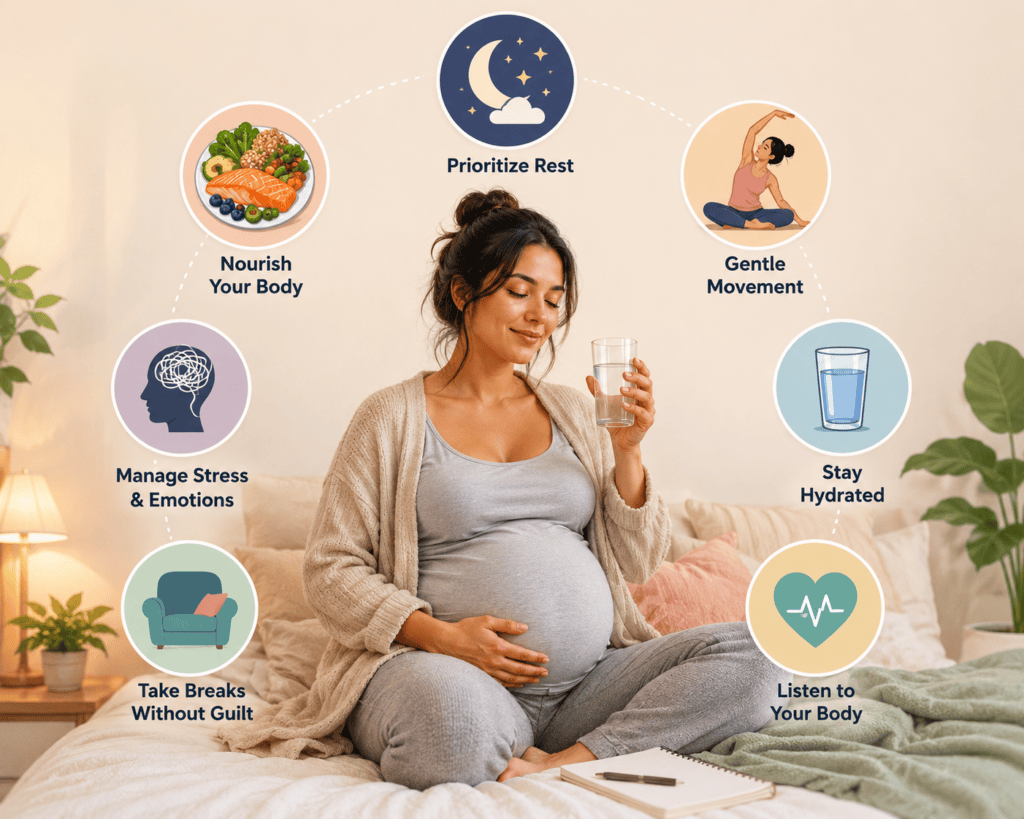
To combat nocturnal wakefulness, construct a supportive sleep layout using targeted pillow placement. Sleep strictly on your left side to maximize blood flow to the placenta and kidneys. Place a firm pillow between your knees to align your pelvis and relieve lower back pressure, and tuck a wedge pillow under your abdomen to prevent muscle strain.
2. Deploy Small, Dense Micronutrient Windows
With your stomach physically compressed by your growing uterus, large meals can trigger severe acid reflux and immediate lethargy. Shift your eating patterns to small, nutrient-dense meals spaced every three hours. Focus on highly bioavailable proteins, healthy fats (like avocados and walnuts), and iron-rich foods to prevent maternal anemia from compounding your fatigue.
3. Practice Restorative Nervous System Regulation
When physical discomfort triggers a low-grade stress response, your body releases cortisol, which drains your remaining energy reserves. Dedicate 15 minutes twice a day to somatic relaxation. Lie down with your hips slightly elevated, practice gentle diaphragmatic breathing, and allow your pelvic floor and lower back muscles to completely release their tension.