Many people are told they have prediabetes or Type 2 diabetes without ever receiving an explanation of what actually went wrong. They are simply told to stop eating sugar.
The real culprit behind the scenes is a condition called insulin resistance.
Long before your blood sugar numbers spike into the danger zone, your cells are quietly changing how they react to food. Understanding this hidden trap is the key to reversing the trend and protecting your long-term health.
1. The Overloaded Cell: Why the System Ignores the Signals
To understand insulin resistance, imagine a busy packing room where boxes are arriving every minute.
The Constant Influx
When your diet contains a constant stream of highly processed snacks, white flour, and sugary drinks, your body is continuously flooded with glucose. Your pancreas responds by pumping out massive amounts of insulin to clear the highway.
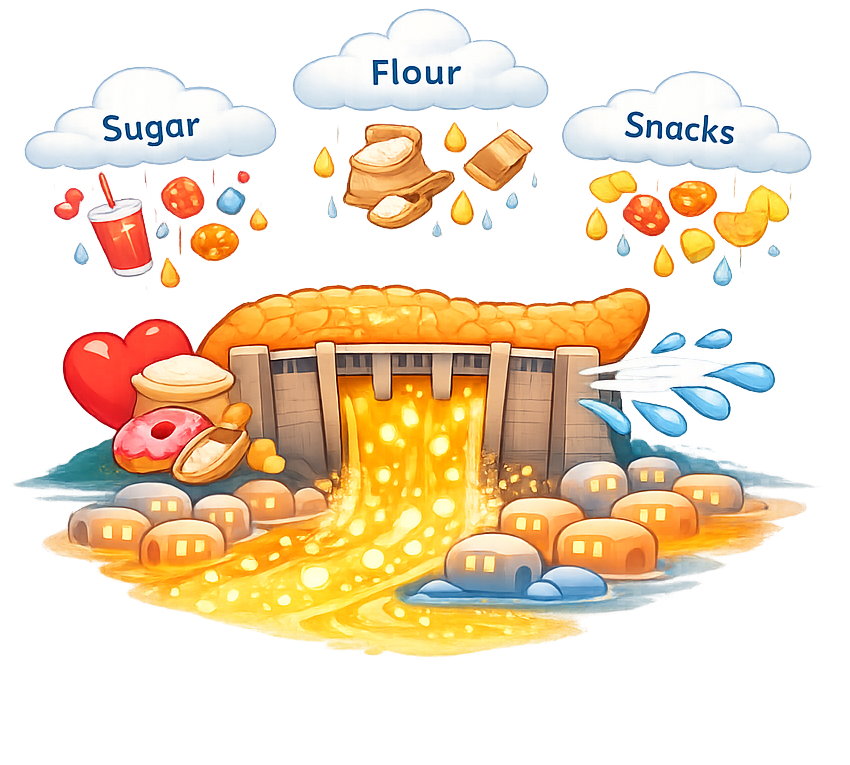
The Lockout
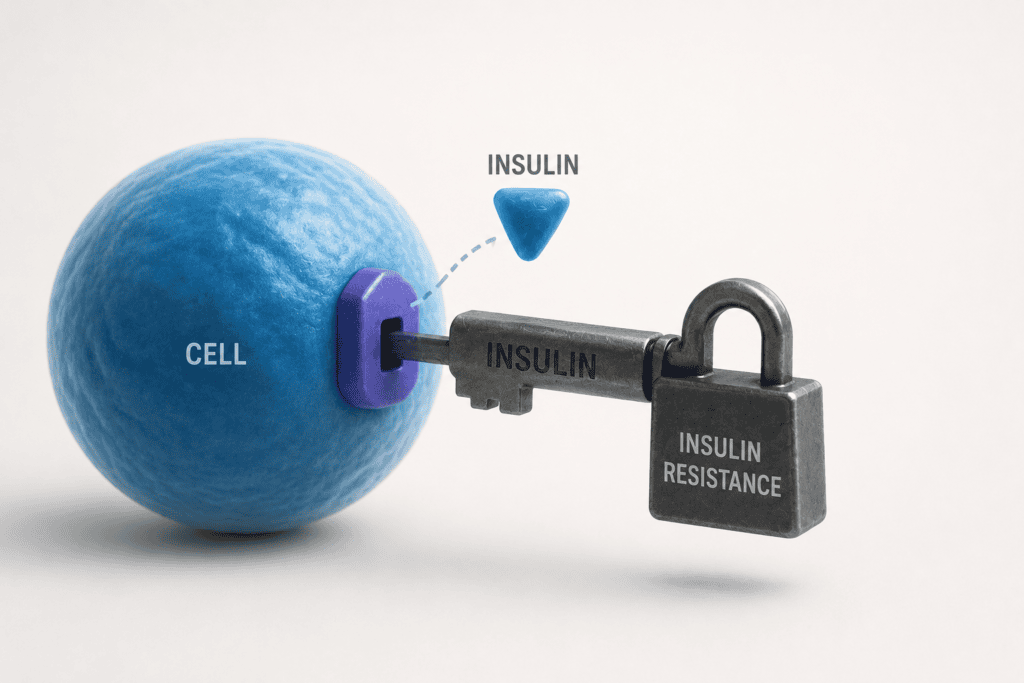
Over time, your cells become completely overwhelmed by the constant presence of insulin. To protect themselves from being stuffed with too much energy, they begin to ignore the insulin keys. The cells turn down their sensors, making the locks stiff and unresponsive.
2. The Pancreas Exhaustion: The Slow Road to High Sugar
Once your cells become resistant to insulin, your body enters a dangerous cycle that can run silently for years.
The Hidden Workload
Because the sugar is not dropping, your brain assumes there are not enough keys in the system. It signals your pancreas to build more. For a long time, your pancreas successfully makes double or triple the normal amount of insulin, forcing the resistant cells to open up. Your blood tests might look completely normal during this phase.
The Burnout Point
Eventually, the pancreas hits a wall. It cannot keep up with the exhausting demand for extra insulin. As insulin production slows down, sugar begins to gather in the bloodstream, leading to prediabetes and eventually a full Type 2 diabetes diagnosis.
The Insulin Resistance Self-Check
Watch out for these three subtle signs that your body’s cells are beginning to ignore the insulin keys:
The Midday Waistline Expansion: You notice your body is primarily storing fat directly around your stomach and abdomen, even if your arms and legs stay relatively lean.
Intense Post-Meal Brain Fog: You feel incredibly sleepy, heavy, and unfocused within an hour of eating a carbohydrate-heavy lunch.
Darkened Skin Patches: You notice smooth, darkened velvet-like patches of skin forming around the back of your neck or under your arms.
Simple Food Changes & Habits to Wake Up Your Cells
Smart Food Choices to Lower the Workload
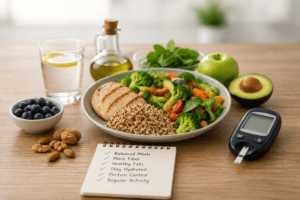
Eat Healthy Fats First: Start your meals with a small salad dressed with extra virgin olive oil, or half an avocado. Healthy fats do not trigger insulin spikes, giving your pancreas a well-deserved break.
Incorporate Apple Cider Vinegar: Drinking a tablespoon of apple cider vinegar diluted in a large glass of water before a meal helps improve your cells’ insulin sensitivity, allowing sugar to clear out faster.
Home Habits for Better Cell Response
Try Time-Restricted Eating: Keep your eating window within a simple 10-hour block during the day (for example, 9:00 AM to 7:00 PM). Leaving a 14-hour gap overnight allows your insulin levels to drop to a baseline floor, giving your cell locks time to reset.
Build Lean Muscle: You do not need to lift massive weights. Simple bodyweight squats or resistance band exercises build lean muscle tissue, which acts like a massive sponge that sucks up sugar from your blood without needing extra insulin.