The moment a doctor mentions blood sugar concerns, people immediately think they are banned from the kitchen. They assume they are stuck eating plain lettuce and dry chicken breast for the rest of their lives.
Managing diabetes does not mean starving your body.
It simply means changing how you assemble your plate. By making small, intelligent food swaps and learning how to layer your meals, you can enjoy delicious, real food while keeping your blood sugar stable.
1. The Plate Method: Rebalancing Your Food Groups
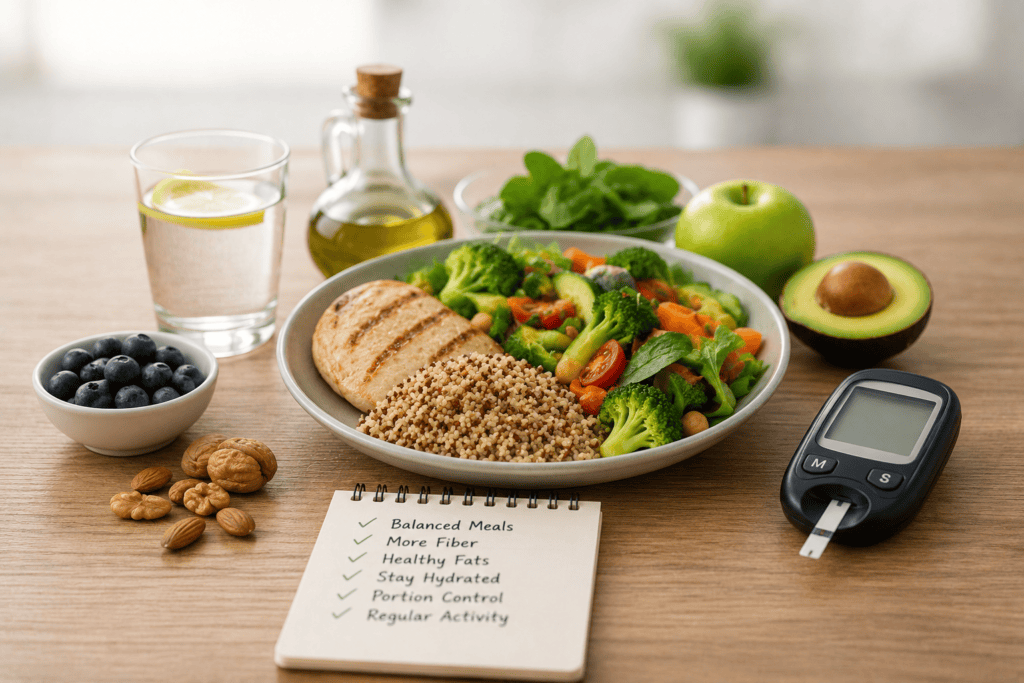
You do not need to carry a digital kitchen scale everywhere you go to keep your blood sugar numbers in check. You just need to look at the proportions on your plate.
The Veggie Foundation
Fill exactly half of your plate with non-starchy vegetables. Think of steamed broccoli, roasted cauliflower, raw spinach, cucumbers, and cabbage. These foods are packed with fiber, which acts like an internal net that slows down the absorption of sugars from the rest of your meal.
The Fuel Balance
Divide the remaining half of your plate into two equal sections. Fill one quarter with high-quality protein like wild fish, chicken, or lentils. Fill the final quarter with a complex carbohydrate like brown rice or sweet potato. This layout ensures you get full without overwhelming your bloodstream.
2. Hidden Sugars: Spotting the Clean Eating Traps
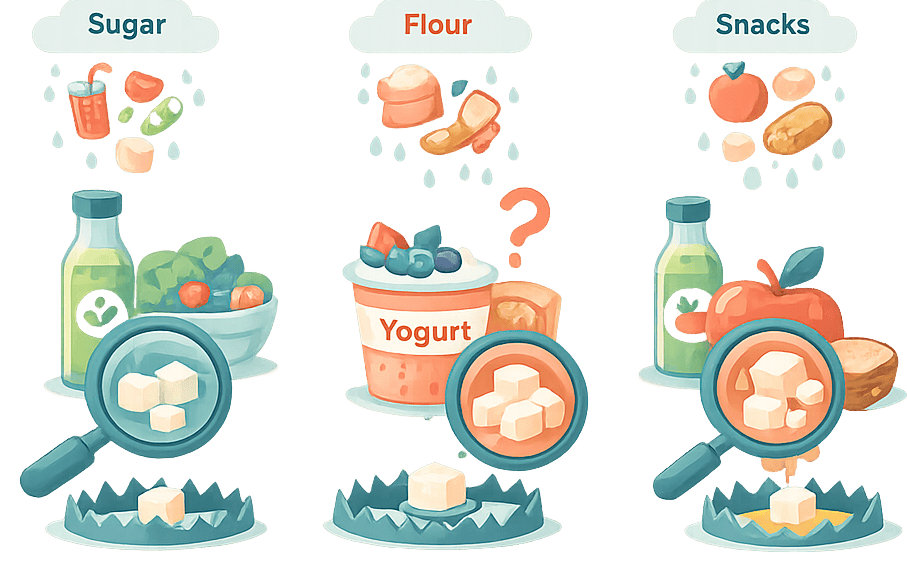
Many people struggle to lower their blood sugar because they fall into common dietary traps hidden inside foods marketed as healthy.
The Juice Illusion
Drinking a large glass of orange or apple juice seems like a healthy habit. However, juicing strips away all the natural fiber from the fruit, leaving behind pure liquid fructose. Without fiber, fruit juice hits your liver and bloodstream just as fast as a sugary soda. Always choose to eat the whole fruit instead of drinking it.
The Condiment Secret
Store-bought salad dressings, tomato ketchups, BBQ sauces, and low-fat yogurts are often packed with high-fructose corn syrup to improve their taste. Always read the back labels and choose full-fat options with no added sugars.
The Blood Sugar Dietary Self-Check
Watch out for these three red flags that show your current meals are causing massive sugar spikes behind the scenes:
The Two-Hour Hunger Attack: You feel incredibly hungry, shaky, or irritable exactly two hours after eating a large bowl of pasta or white rice.
Intense Sweet Cravings: You experience an uncontrollable urge to eat something sweet immediately after finishing a heavy savory meal.
Frequent Midnight Waking: You wake up suddenly in the middle of the night feeling hot, anxious, or wide awake, which can be caused by a late-night sugar crash.
Practical Food Swaps for Everyday Meals
Simple Swaps for Better Sugar Control
Swap White Rice for Cauliflower Rice: Mix half white rice with half riced cauliflower. It tastes great, slashes the carbohydrate load of your meal in half, and adds extra fiber.
Swap Potato Chips for Handful of Walnuts: When you need a crunchy snack, avoid processed chips. Reach for raw walnuts, pecans, or almonds to get healthy fats that satisfy your hunger without moving your blood sugar.
Smart Kitchen Habits
Eat Your Food in the Correct Order: When sitting down to eat, follow a simple rule: eat your vegetables first, your protein second, and your starches last. This sequencing alone drastically reduces your post-meal sugar spike.
Cook and Cool Your Carbs: If you love potatoes or rice, cook them the day before and let them cool down in the fridge overnight. This process creates resistant starch, which changes the food structure so it digests much slower, saving your pancreas from extra stress.