We live in a world that praises constant hustle. Because of this, feeling tired has become a normal badge of honor for most working adults. We assume that a long weekend or a few extra hours of sleep will fix our low energy.
But what happens when sleep no longer restores you? What does it mean when you wake up feeling just as exhausted as when your head hit the pillow the night before?
When exhaustion becomes deep and permanent, it is no longer standard tiredness. It is a sign that your body’s internal energy systems are completely drained. Finding the biological root cause of chronic fatigue requires looking past your sleep schedule and examining your body’s deep metabolic markers.
1. The HPA Axis: How Stress Drains Your Cellular Fuel
Your body responds to daily challenges using a complex communication pathway called the HPA Axis (Hypothalamus-Pituitary-Adrenal Axis). When you encounter stress, your brain tells your adrenal glands to release cortisol, your primary survival hormone.
In short bursts, cortisol is highly beneficial. It raises blood sugar and sharpens your focus to help you handle a crisis.
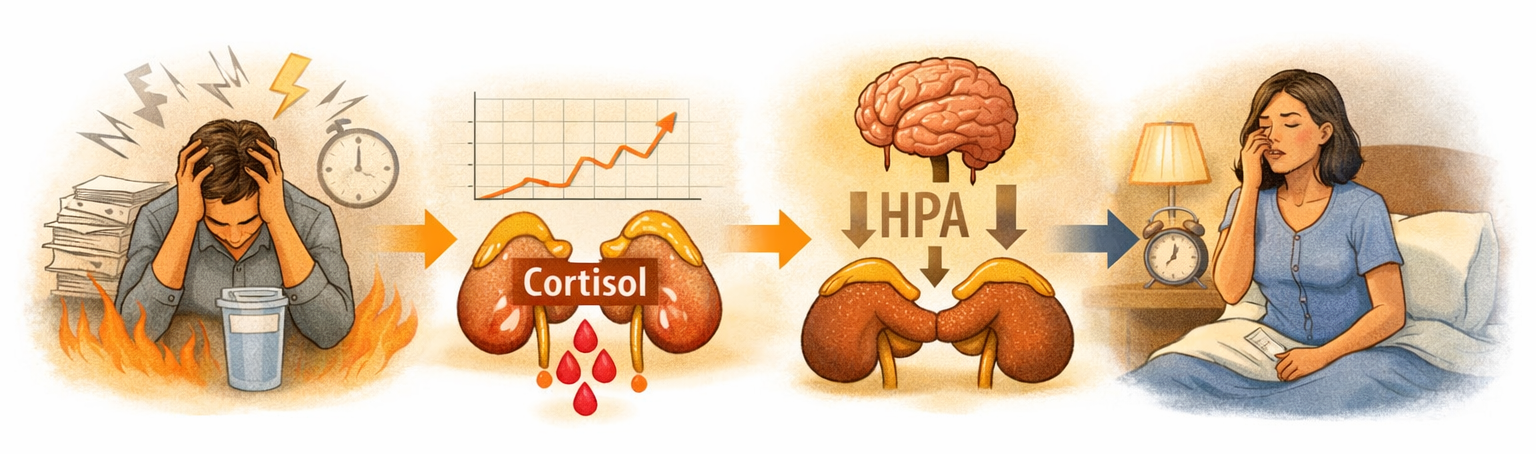
However, when stress never stops, the HPA axis enters a state of dysfunction. Your adrenal glands struggle to maintain healthy hormone rhythms. Instead of a high cortisol surge in the morning to wake you up, your cortisol curve flattens out completely. This leaves you feeling exhausted all morning, often followed by a strange burst of anxious energy late at night.
2. Mitochondria Under Attack: The Cellular Roots of Brain Fog
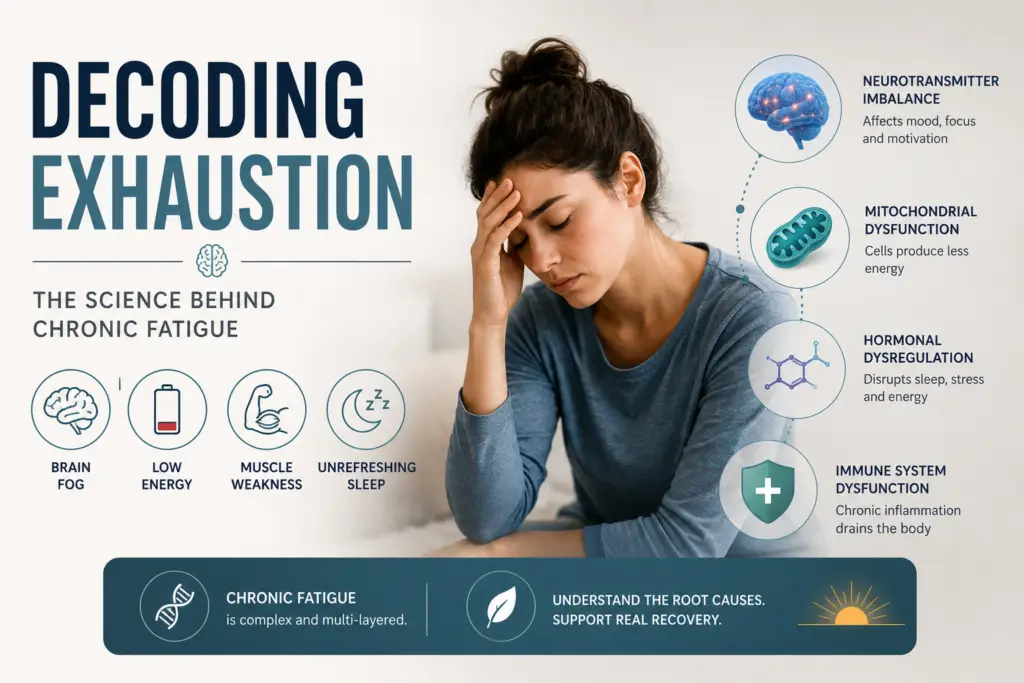
Chronic fatigue does not just live in your muscles; it also severely impacts your brain. People with chronic fatigue almost always complain of brain fog, which includes poor short-term memory, difficulty finding words, and a complete inability to focus on complex tasks.
The Power Plant Shutdown
Your brain consumes roughly 20% of your body’s total daily energy. This massive energy demand is supplied by millions of microscopic power plants inside your neurons called mitochondria. When your body is flooded with chronic physical stress or low-grade gut inflammation, it creates harmful molecules called free radicals. These molecules damage your mitochondria, slowing down their ability to generate cellular fuel.
The Cellular Energy Starvation
When your brain cells cannot produce enough energy, they prioritize basic survival over high-level thinking. Your mental processing speed drops instantly. Reading an article or working on an application panel begins to feel as exhausting as running a physical marathon.
The Chronic Fatigue Biological Check
Evaluate your energy profile against these three common signs of systemic metabolic exhaustion:
Post-Exertional Crash: A small amount of physical exercise or mental effort causes a massive drop in energy that lasts for 24 to 48 hours afterward.
Unrefreshing Sleep Architecture: You sleep for eight to nine hours straight, but you wake up feeling completely heavy, un-rested, and groggy.
Frequent Waking Dizziness: You feel lightheaded or dizzy for a few seconds immediately after standing up from a chair or bed, showing a drop in blood pressure regulation.
Simple Solutions to Restore Your Baseline Vitality
Targeted Foods for Cellular Recovery
Fuel Your Mitochondria with CoQ10: Coenzyme Q10 is a natural compound your cells use to transport energy inside the mitochondria. Boost your levels by eating organ meats, grass-fed beef, broccoli, and sesame seeds regularly.

Stabilize Blood Sugar with Healthy Fats: Spikes and crashes in blood sugar force your adrenal glands to work overtime. Swap sugary breakfast grains for clean fats and clean proteins. Eat pasture eggs with half an avocado to keep your energy steady for hours.
Home Habits for Nervous System Repair
Practice Strict Pacing Zones: Stop using the “boom and bust” cycle. When you have a high-energy day, do not try to finish your entire weekly to-do list at once. Save half your energy reserves to prevent your system from crashing the next morning.
Deploy Non-Sleep Deep Rest (NSDR): Lie down flat in a quiet room for 20 minutes in the middle of your workday. Close your eyes and practice slow, deep breathing without sleeping. This simple habit calms your HPA axis and lowers morning cortisol strain.