
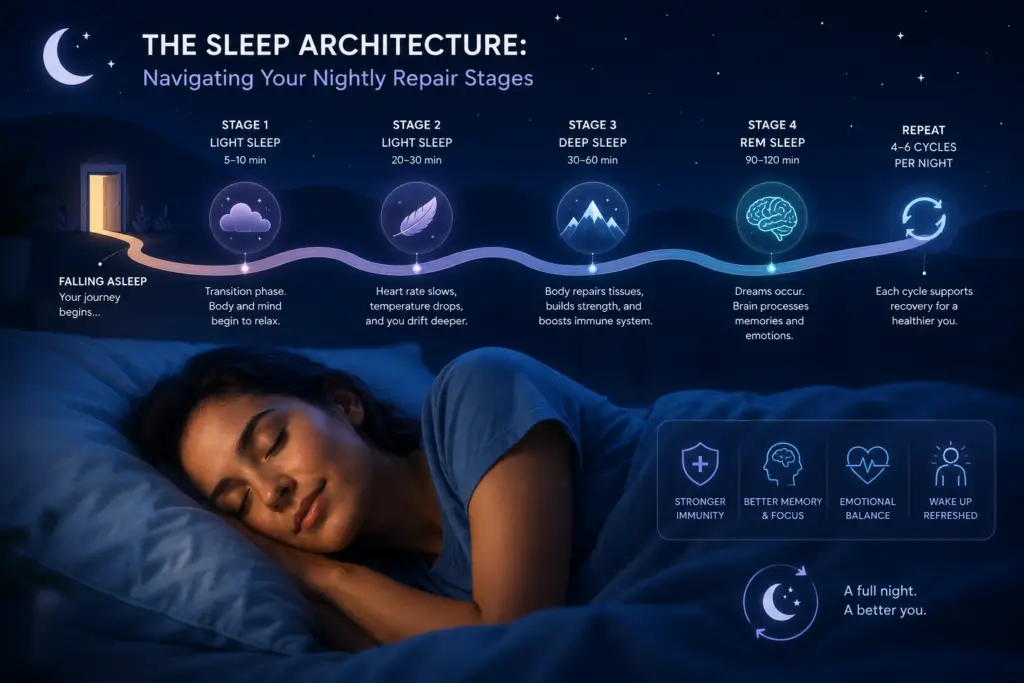
Many people believe that sleep quality is simply a matter of total hours spent in bed. They assume that an eight-hour stretch of rest provides the exact same benefits regardless of how it unfolds.
Real recovery depends on your underlying sleep architecture.
Your brain cycles through distinct, highly organized sleep stages every night. Skipping or interrupting even one of these stages prevents your nervous system and muscles from completing their designated maintenance tasks.
1. The Deep Sleep Clean: How Your Brain Flushes Out Toxins
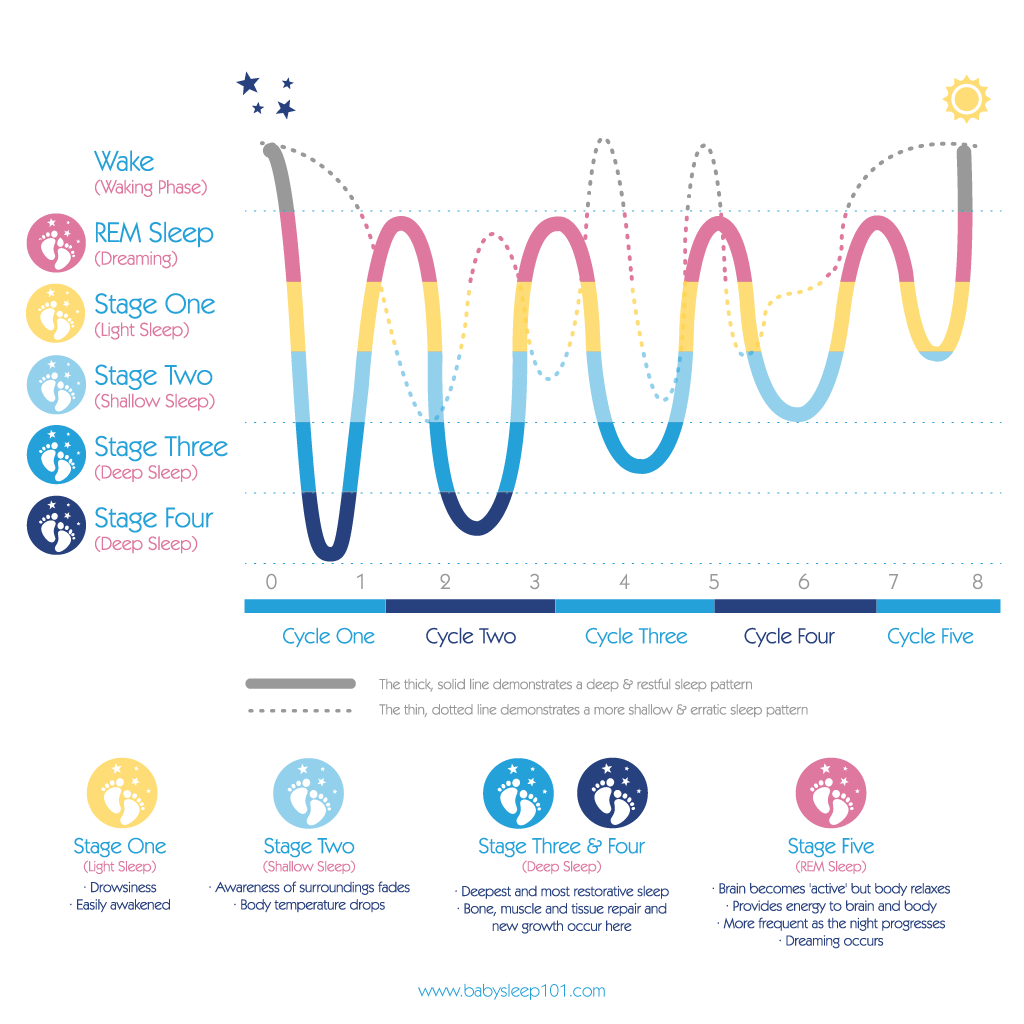
During the first half of your night, your sleep architecture prioritizes slow-wave sleep, commonly known as Deep Sleep.
The Glymphatic System
When you enter deep sleep, your brain cells physically shrink by roughly 60 percent. This shrinkage creates extra space between your cells, allowing cerebrospinal fluid to rush through your brain tissue. This process, called the glymphatic system, functions like an internal dishwasher, washing away beta-amyloid plaques and metabolic waste built up from intense problem-solving and coding.
Physical Growth Hormone
Deep sleep is also the window when your pituitary gland releases over 70 percent of your daily supply of Human Growth Hormone (HGH). Your body uses this hormone surge to repair micro-tears in muscle tissue, synthesize proteins, and rebuild cellular structures strained by daily physical activity.
2. The REM Phase: Reformatting Your Cognitive Hard Drive
During the second half of the night, your sleep architecture shifts focus toward Rapid Eye Movement (REM) sleep.
Memory Consolidation
While deep sleep restores your physical body, REM sleep restores your mind. During this stage, your brain takes short-term memories and complex technical skills learned during the day and writes them onto your long-term cognitive hard drive. It builds new neural connections, making it easier to solve programming or logical problems the following day.
Emotional Defragmentation
REM sleep is the only time your brain completely shuts off the release of stress chemicals like noradrenaline. This calm allows your mind to process complex emotional events and daily stresses safely, lowering your resting anxiety and resetting your creative focus for the day ahead.
The Distorted Sleep Architecture Self-Check
Watch out for these three signs that your body is failing to transition through its vital recovery cycles properly:
Morning Muscle Stiffness: You sleep for eight hours but wake up with stiff joints and sore muscles, indicating a lack of deep slow-wave physical repair.
The “Groundhog Day” Fog: You struggle to remember technical details or logic lines you worked on the previous day, showing disrupted REM cycles.
Frequent 4:00 AM Awakenings: You consistently wake up alert in the early morning hours, splitting your sleep architecture and cutting off your final REM windows.
Easy Foods & Habits to Protect Your Sleep Cycles
Clean Eating Choices for Cycle Stability
Eat Choline-Rich Foods: Choline helps your body produce acetylcholine, a neurotransmitter that controls your transitions into REM sleep. Include pasture-raised egg yolks, wild salmon, and cooked shiitake mushrooms in your meals.
Incorporate Tart Cherry Juice: Pure tart cherry juice contains natural melatonin and proanthocyanidins, which help extend total sleep duration and prevent early morning awakenings.
Home Habits for Deep Sleep Architecture
Drop the Core Temperature: Your brain must drop its internal temperature by 2°F to trigger deep sleep. Set your bedroom thermostat to a cool 65°F (18°C) and take a warm shower 90 minutes before bed to accelerate this cooling loop.
Eliminate Alcohol Before Bed: Avoid drinking alcohol within four hours of sleep. While it may make you feel drowsy, alcohol acts as a potent REM-sleep suppressant, fragmentation your architecture and leaving you mentally sluggish.