
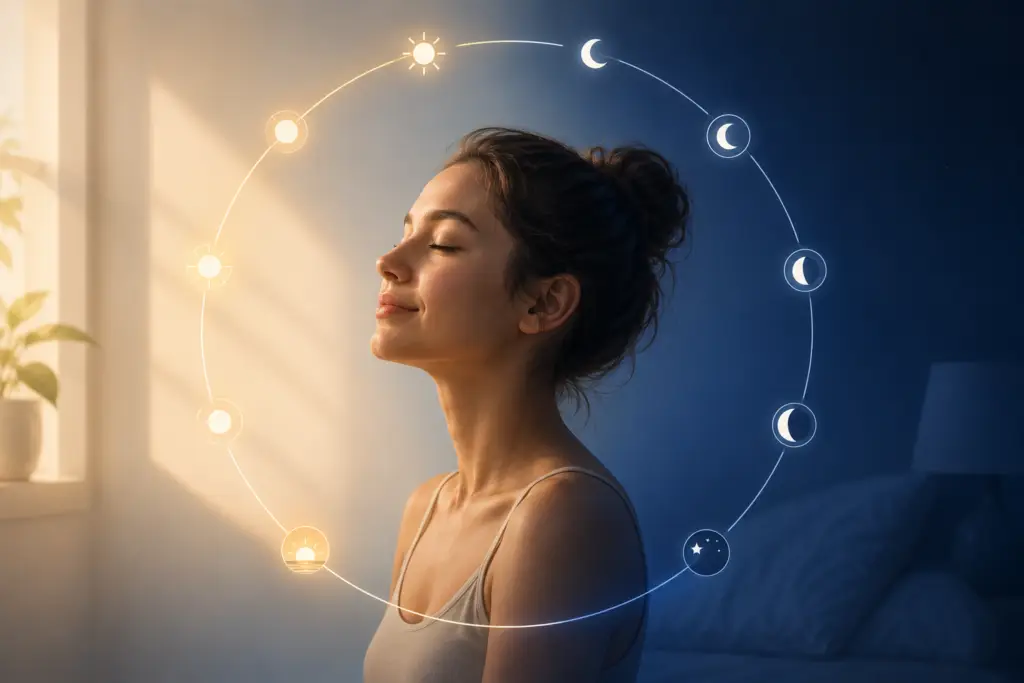
When you think about hacking your recovery, you might think of cold plunges or expensive tracking gadgets. However, your body’s primary recovery system relies on a primitive biological clock.
Your brain runs a strict 24-hour cycle called the circadian rhythm.
This internal clock controls exactly when your body releases energy hormones and when it shifts into deep tissue repair. When you synchronize this engine with natural light cycles, your deep recovery functions unlock effortlessly.
1. The Master Clock: How Your Eyes Signal the Brain
Your circadian engine does not guess the time of day. It relies on direct data from your environment through a specialized pathway in your eyes.

The Daylight Sensor
Inside your retinas sit special cells called intrinsically photosensitive retinal ganglion cells (ipRGCs). These cells do not help you see shapes; instead, they measure blue light waves from the sun. When bright morning sunlight hits these cells, they send an immediate electrical signal to the suprachiasmatic nucleus (SCN)—the master clock inside your brain.
The Cortisol Awakening Response
Receiving sunlight first thing in the morning prompts your brain to trigger a healthy spike of cortisol. This morning hormone clears out lingering grogginess, raises your core body temperature, and starts a countdown timer for your evening sleep cycles. If you stay in a dark indoor workspace all morning, this hormone curve flattens, causing persistent midday sluggishness.
2. The Melatonin Suppression Trap: How Artificial Light Delays Repair
Your body cannot begin deep cellular recovery if it is constantly exposed to synthetic light sources after dark.
The Evening Shift
As natural daylight fades, your master clock instructs the pineal gland to manufacture melatonin. Melatonin is the chemical signal that tells your organs to slow down and prepare for metabolic repair. It acts as a powerful antioxidant that cleans up brain inflammation accumulated during your working hours.
Screen Distortion
Modern energy-efficient LED screens and overhead office lights emit high concentrations of short-wavelength blue light. When you look at screens late at night, you trick your brain into thinking it is still noon. This exposure suppresses melatonin production for hours, delaying your deep sleep window and forcing your body to skip vital recovery phases.
The Misaligned Circadian Rhythm Self-Check
Watch out for these three everyday physical signs that your internal master clock is out of sync with your working environment:
The 11:00 PM Second Wind: You feel exhausted all evening, but suddenly experience a sharp surge of mental alertness and energy right when you should be falling asleep.
Morning Sunlight Sensitivity: Stepping outside into normal daylight makes your eyes sting, water, or ache, showing a lack of natural light exposure.
Consistent 3:00 PM Energy Crashes: You experience a heavy mental and physical slump in the mid-afternoon that requires caffeine or sugar to overcome.
Easy Foods & Habits to Support Your Circadian Rhythm
Clean Eating Choices for Hormonal Precursors
Eat Tryptophan-Rich Foods: Your body uses the amino acid tryptophan to build serotonin, which later converts into melatonin. Build your dinner around pasture-raised turkey, pumpkin seeds, and wild-caught cod.
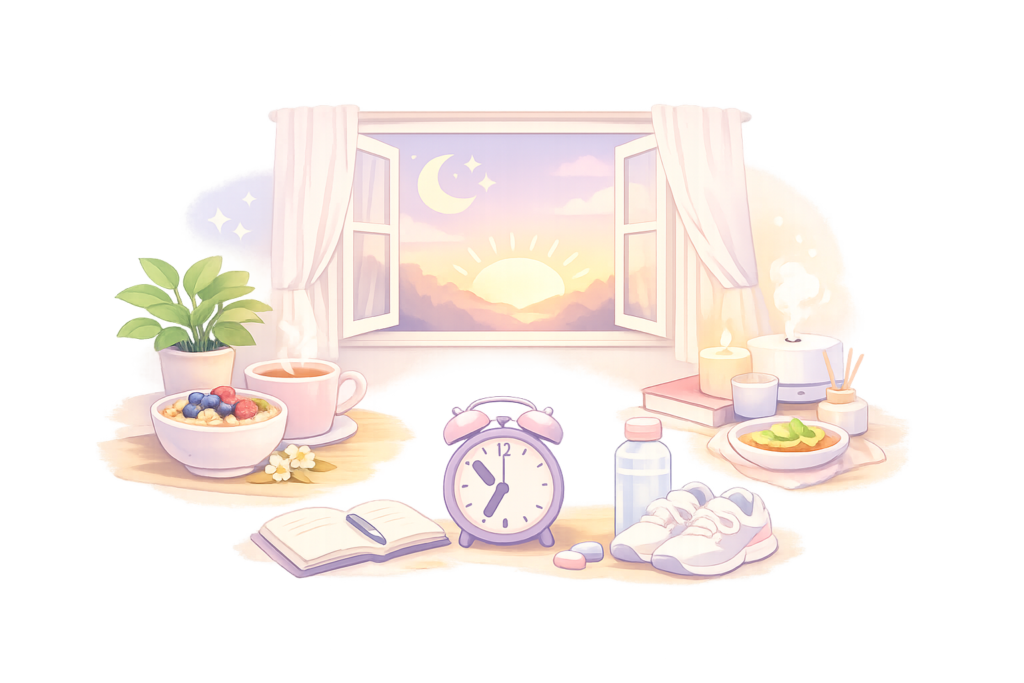
Incorporate Kiwifruit: Eating two raw kiwis before bed has been shown to improve sleep efficiency, as they contain natural levels of serotonin and antioxidants that aid sleep transitions.
Home Habits for Light Management
Get 10 Minutes of Morning Sun: Step outside without sunglasses within 30 minutes of waking up. Let direct, unfiltered daylight hit your eyes for 10 minutes to set your master clock.
Enforce a Digital Curfew: Switch all household lighting to dim, warm tones after 8:00 PM, and activate a blue-light-blocking app or wear amber-tinted glasses if you must finish late-night administrative work.