

When your nervous system is constantly firing from long hours of technical work, your muscles and brain cells accumulate internal tension. You cannot sleep deeply if your cells remain in an excited state.
To switch from high-alert production into deep recovery, your body requires a specific biochemical key.
That key is magnesium. This vital mineral acts as your nervous system’s natural brake, turning down cellular stress so your body can rest.
1. The GABA Regulator: How Magnesium Calms a Racing Mind
Your brain relies on an elegant balance of excitatory chemicals that wake you up, and calming chemicals that settle you down.
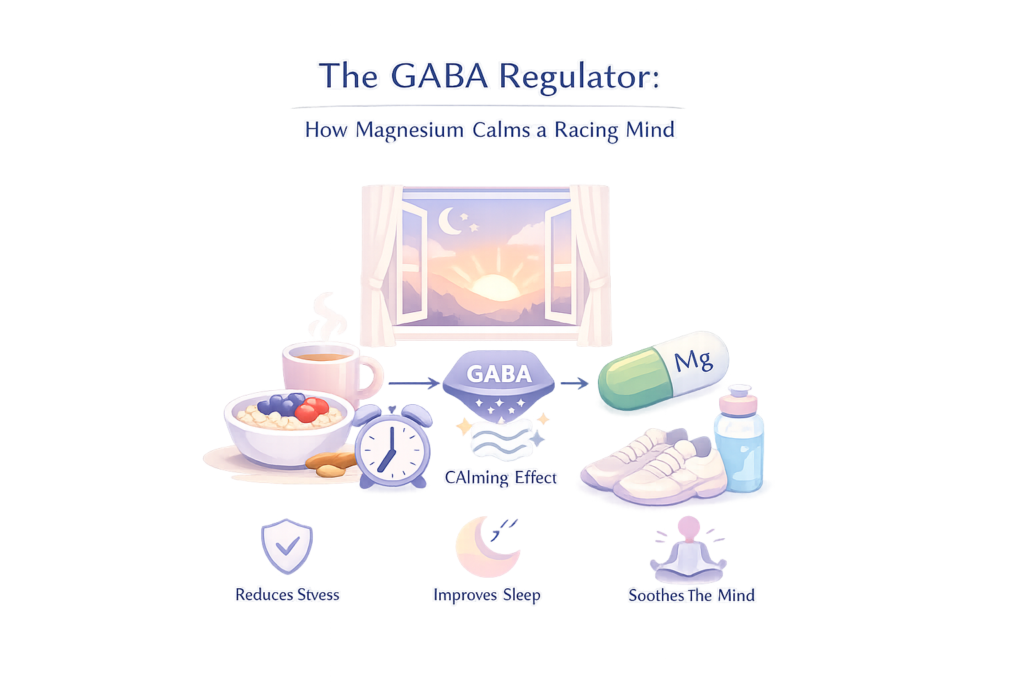
The Cellular Gatekeeper
Magnesium binds directly to gamma-aminobutyric acid (GABA) receptors in your brain. GABA is your primary calming neurotransmitter. Think of it as your mind’s natural sedative. When magnesium binds to these receptors, it opens cellular gates that damp down racing thoughts and lower central nervous system activity.
NMDA Blocking
Additionally, magnesium sits inside specialized cell receptors called NMDA receptors, preventing an excitatory chemical called glutamate from over-stimulating your neurons. Without enough magnesium to block these sites, glutamate over-excites your brain cells, leaving you trapped in a state of restless mental chatter when you try to sleep.
2. Muscular Restoration: How Magnesium Stops Physical Tension
Your muscles cannot relax on command; they require a precise exchange of mineral ions to release physical tension.
The Calcium Struggle
To contract a muscle, your body pumps calcium into your muscle fibers. To relax that muscle, your body must pump calcium out and replace it with magnesium. If your system is deficient in magnesium, calcium floods your muscle cells unchecked, leading to persistent physical tightness, involuntary twitches, and painful nighttime leg cramps.
Cortisol Regulation
Magnesium also dampens the activity of the hypothalamic-pituitary-adrenal (HPA) axis, which manages your body’s stress response. Adequate magnesium levels prevent your adrenal glands from pumping out excess cortisol in the evening, ensuring your heart rate and blood pressure drop into a restorative recovery zone.
The Magnesium Depletion Self-Check
Watch out for these three everyday physical signs that your body’s relaxation switch is running dangerously low on magnesium:
Involuntary Eyelid Twitches: You notice a persistent, annoying twitching sensation in your eyelid or minor facial muscles during long screen sessions.
Nighttime Calf Cramps: You wake up suddenly in the middle of the night with sharp, painful spasms or tightness in your calves or feet.
Restless Leg Syndrome: You experience an uncomfortable, crawling urge to constantly move your legs as soon as you lie down in bed.
Easy Foods & Habits to Maximize Your Magnesium Levels
Clean Eating Choices for Mineral Load
Eat Dark Green Leafy Vegetables: Magnesium sits at the center of the chlorophyll molecule that makes plants green. Eat large servings of steamed spinach, Swiss chard, and curly kale daily.
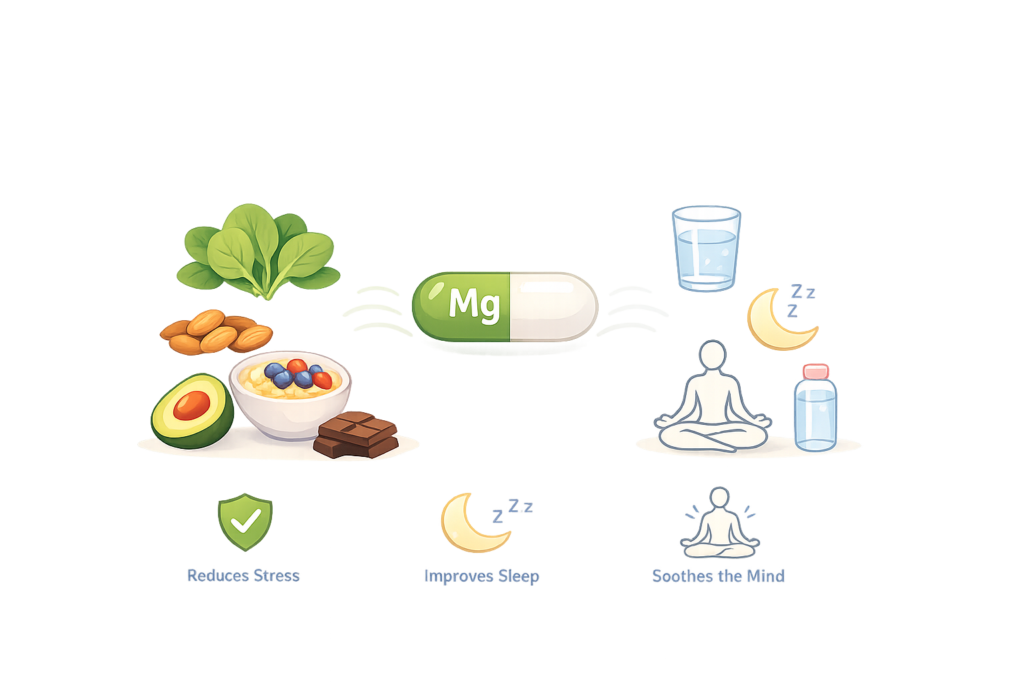
Snack on High-Quality Cacao: Organic dark chocolate (above 85% cacao), raw pumpkin seeds, and avocados are exceptional whole-food sources of highly bioavailable magnesium.
Home Habits for Mineral Absorption
Take a Nightly Epsom Salt Bath: Dissolve two cups of magnesium sulfate (Epsom salts) in warm bathwater and soak for 20 minutes before bed. Your skin can absorb trace minerals directly, bypassing your digestion to relax muscles instantly.
Avoid Mineral Blockers: Limit your intake of carbonated sodas and highly processed grains. These foods contain phytic acid and phosphates, which bind to magnesium in your digestive tract and flush it out before your body can use it.