
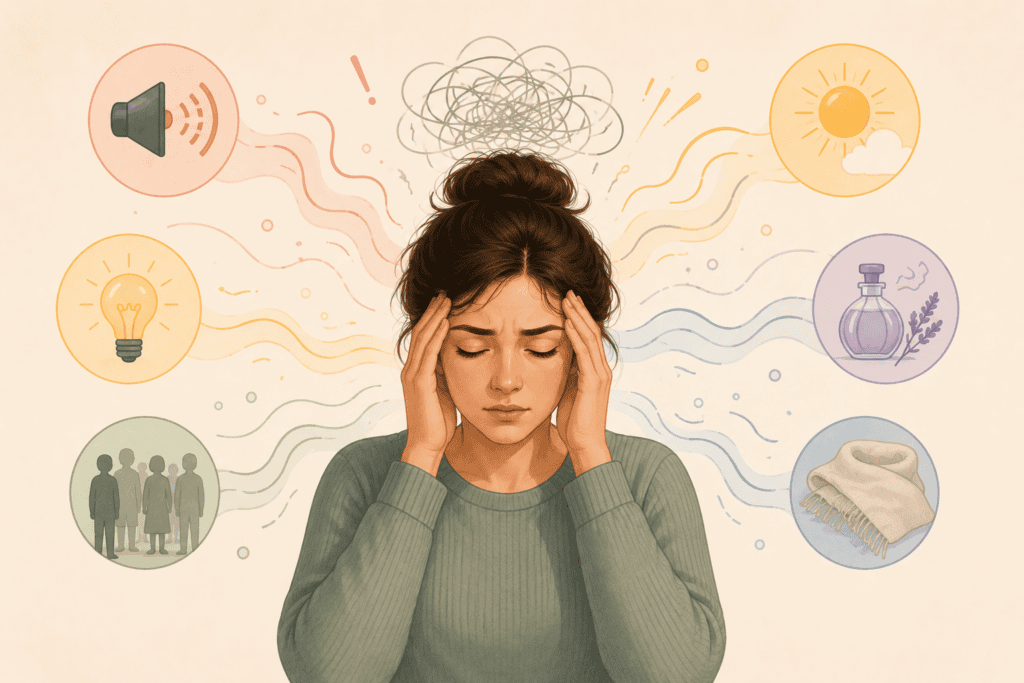
Have you ever felt completely overwhelmed by things other people don’t even seem to notice? A faint hum of a refrigerator, a scratchy clothing tag, or the harsh glare of overhead fluorescent lighting can leave you feeling deeply agitated, fatigued, or irritable.
For a long time, individuals experiencing this intense environmental vulnerability were simply told they were “too sensitive.”
Today, clinical research recognizes this framework as Sensory Processing Sensitivity (SPS)—a distinct temperamental trait characterized by deep processing of environmental stimuli. However, because intense sensory sensitivity overlaps heavily with neurodivergent conditions like Autism and ADHD, learning how your brain filters the world is crucial to managing your daily energy.
1. The Nervous System Filter: Understanding Sensory Processing Sensitivity
Sensory Processing Sensitivity is a biologically based trait found in roughly 15% to 20% of the population. In an individual with standard sensory filtering, the brain registers incoming environmental data (sounds, sights, textures) and quickly categorizes irrelevant information as “background noise.” In an individual with high Sensory Processing Sensitivity, that filter is highly porous.

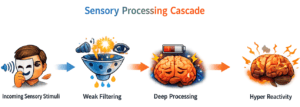
[ Incoming Sensory Stimuli ] ──> Porous Thalamic Filter ──> Deep Cognitive Processing ──> Hyper-Reactivity
The brain’s thalamus allows almost all sensory data to rush into the prefrontal cortex simultaneously. Because your nervous system is processing every single decibel, flash of light, and micro-shift in room temperature at a deep level, your brain consumes its daily metabolic energy stores significantly faster than the average person.
The Sensory Overwhelm Self-Screening Check
Review these three primary markers of high sensory processing sensitivity to better map your environmental boundaries.
1.The Subtlety Registration Baseline:Environmental Processing.
You notice subtle changes in your physical surroundings that others miss—such as a slight shift in the scent of a room, a minor change in the pitch of an appliance, or a tiny change in a coworker’s facial expression.
After spending time in a highly chaotic or crowded environment (like an airport, a shopping mall, or a loud concert), you feel physically exhausted, nauseous, or experience a dull, throbbing headache that requires hours of dark isolation to clear.
You do not just observe other people’s moods; you actively absorb them. Walking into a room where two people have just had an argument causes your heart rate to spike and your stomach to tighten, even if you aren’t involved in the conversation.
Dietary Modifications & Home Remedies for Sensory Calming
When your brain is hyper-reactive to the external world, you can use targeted internal nutrition and physical home environments to dial down your nervous system’s baseline threat response.
Dietary Upgrades to Reduce Neurological Excitability
Stabilize the GABA-Glutamate Axis: Glutamate is your brain’s primary excitatory neurotransmitter (it revs your brain up), while GABA is your primary inhibitory neurotransmitter (it calms your brain down). A diet rich in magnesium-glycinate and vitamin B6 (found in bananas, avocados, and sunflower seeds) directly assists your body in converting raw glutamate into calming GABA, softening your reaction to loud noises and bright lights.
Eliminate Central Nervous System Stimulants: If your sensory filter is already highly porous, regular consumption of caffeine can push your system over the edge into acute panic or anxiety. Swap high-dose caffeinated beverages for soothing, caffeine-free herbal teas like chamomile or lemon balm, which naturally bind to GABA receptors to quiet internal nervous system noise.
Home Remedies for Environmental Shielding
The “Sensory Buffer” Workspace: Modify your physical environment to protect your system from baseline fatigue. Swap out harsh, cool-white overhead fluorescent bulbs for soft, warm-spectrum LED lighting or salt lamps. Utilize targeted noise-dampening earplugs (like Loop or high-fidelity earplugs) during focus hours to lower background decibels without completely cutting off your ability to hear conversation.
Vagal Toning Through Cold Exposure: When an unexpected sensory surge leaves you feeling trapped or panicky, head to a sink and splash ice-cold water directly onto your face, or hold an ice pack against your chest for two minutes. This triggers the mammalian dive reflex, instantly activating your vagus nerve to drop your heart rate, lower blood pressure, and interrupt the sensory panic loop.