
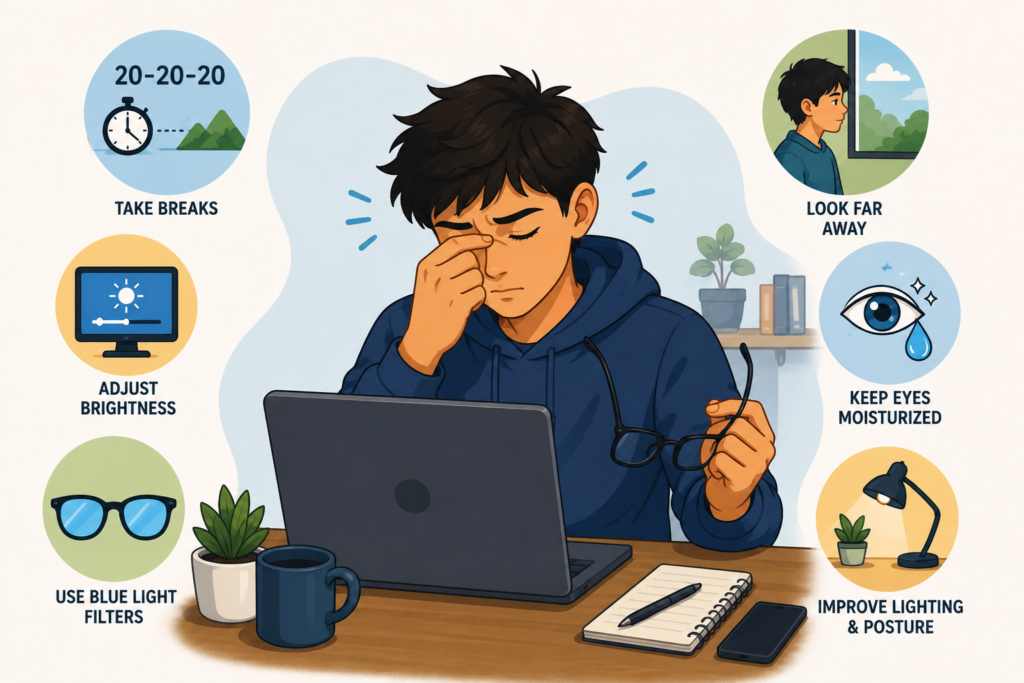
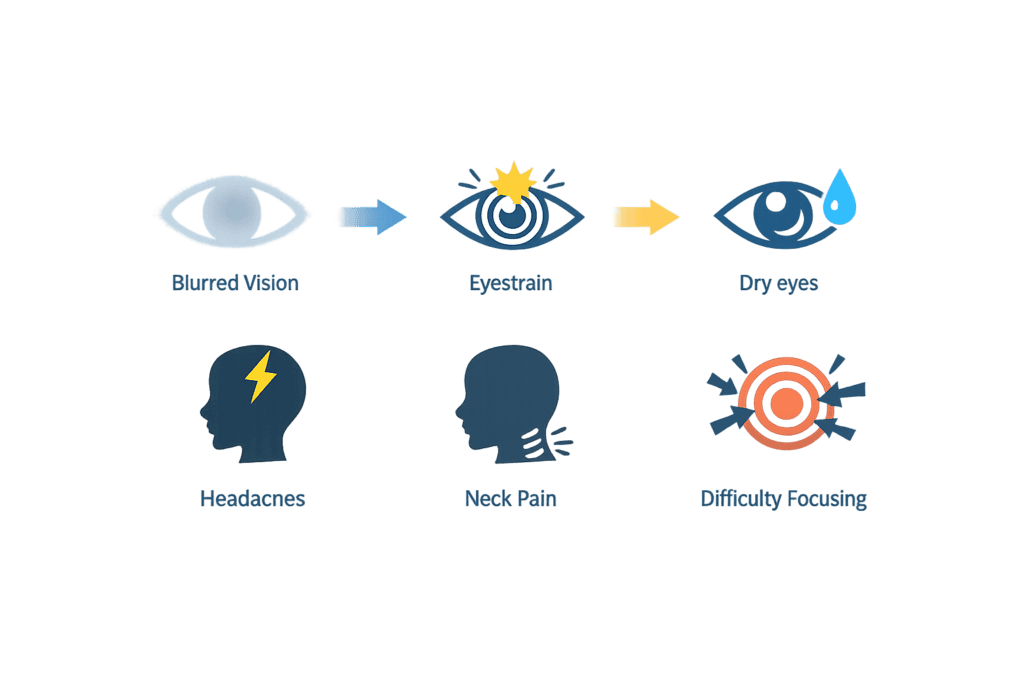
For anyone earning a living in front of a monitor, an afternoon crash often manifests with a specific set of physical symptoms: burning eyes, blurred vision, a dull tension headache behind the forehead, and acute neck fatigue.
While many professionals assume this discomfort is an unavoidable trade-off of digital labor, clinical optometry classifies this cluster of symptoms as Computer Vision Syndrome (CVS) or Digital Eye Strain (DES).
Understanding how excessive screen time alters your ocular mechanics is key to protecting your vision and maintaining high-focus productivity throughout your workday.
1. The Blinking Deficit: What Screens Do to Your Ocular Surface
Under standard conditions, the human eye blinks roughly 15 to 20 times per minute. This involuntary action evenly spreads a specialized, multi-layered tear film across your cornea, keeping it lubricated, optically clear, and protected.
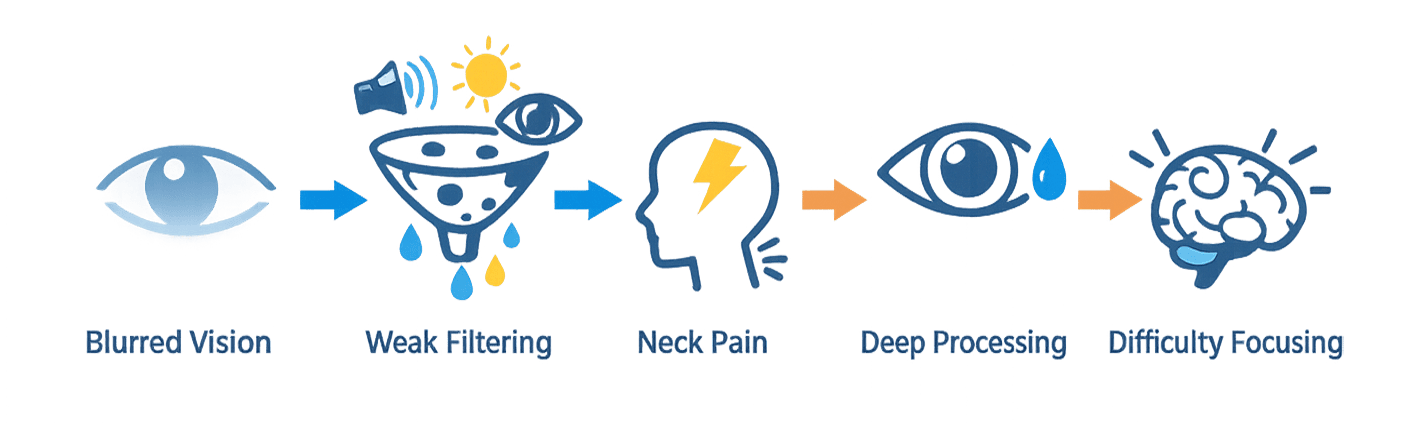
However, clinical eye-tracking studies reveal that when we focus on a digital screen, our blink rate drops by up to 50% to 60%, and the blinks we do make are often incomplete.
This creates a state of chronic evaporative dry eye. Your cornea dries out faster than it can be lubricated, forcing your delicate ciliary muscles to work twice as hard to maintain focus on the digital pixel grid. This continuous muscular strain is what causes the classic midday computer headache.
The Digital Eye Strain Self-Check
If you regularly experience these three tracking markers by 3:00 PM, your visual setup is actively straining your system:
The Focus Lag: When looking away from your computer screen to view an object across the room, it takes your eyes several seconds to adjust and bring the distant object into sharp focus.
Frictional Grittiness: A constant sensation of sand or grit beneath your eyelids, accompanied by reflexive tearing or sudden redness.
Postural Compensation: You find yourself leaning forward or jutting your chin out toward your screen to compensate for micro-blurring, directly causing tension in your upper traps and cervical spine.
Dietary Upgrades & Home Remedies for Eye Recovery
Target Ocular Nutrition
Load Up on Lutein and Zeaxanthin: These specific dietary carotenoids accumulate inside your macula, acting as internal “blue-light sunglasses” that naturally filter out damaging high-energy visible light. Build a diet rich in pasture-raised egg yolks, kale, spinach, and orange bell peppers to restock these protective optical pigments.
Hydrate the Tear Film via Omega-3s: To prevent your tears from evaporating instantly during screen focus, increase your intake of high-quality EPA and DHA Omega-3 fatty acids (found in salmon, sardines, and algae oil supplements). These fatty acids optimize the function of your meibomian glands, which produce the outer oil layer of your tear film.
High-Efficiency Home Remedies
The 20-20-20 Visual Rule: Set an automated desk timer. Every 20 minutes, look away from your screen and focus your gaze on an object at least 20 feet away for a full, non-negotiable 20 seconds. This simple action completely relaxes the ciliary muscles inside your eye, breaking the continuous accommodative spasm caused by close-up screen work.
The Warm Compress Gland Reset: Every evening, place a clean washcloth soaked in warm water (roughly 40°C) over your closed eyelids for five minutes. The gentle heat liquefies any hardened oils blocking your meibomian glands, restoring natural lubrication while you sleep.