When people talk about diabetes, the conversation usually goes straight to sugar, finger-prick tests, and medications. It can feel overwhelming with all the clinical terms thrown around.
But at its core, diabetes is simply a breakdown in how your body handles its daily fuel.
Every cell in your body needs energy to function, and that energy comes from the food you eat. When you have diabetes, the system that delivers this fuel to your cells gets stuck, causing sugar to back up in your blood instead of being used for energy.
1. The Energy Highway: How Insulin Works Like a Key
To understand diabetes, you have to look at how a healthy body manages a meal. When you eat, your digestive system breaks down food into a simple sugar called glucose.
The Fuel Delivery
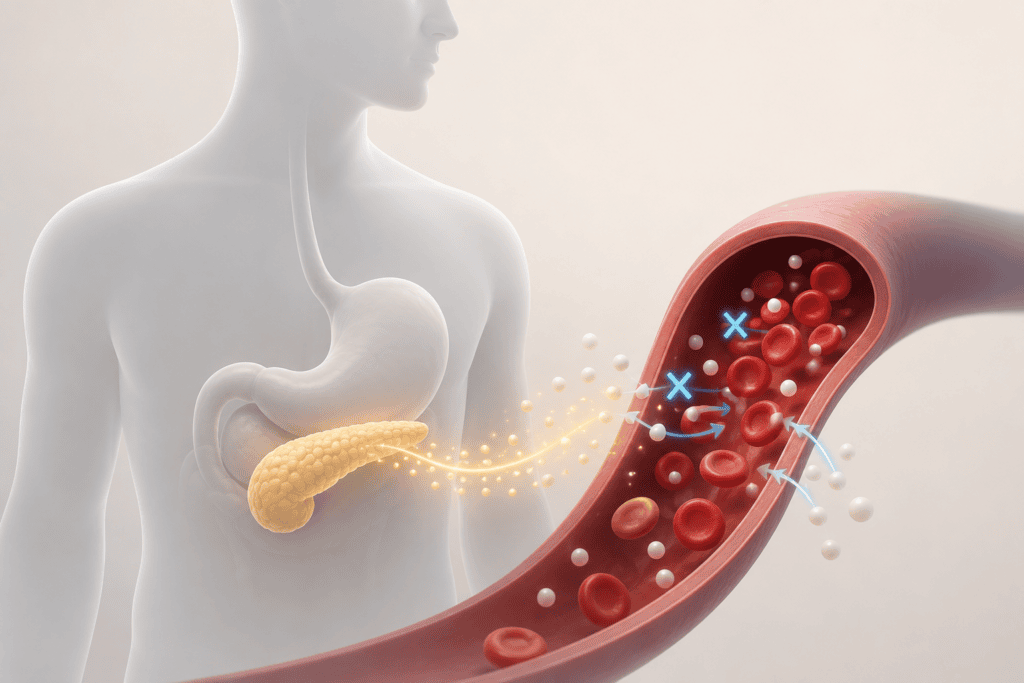
Glucose enters your bloodstream, ready to feed your muscles, brain, and organs. However, glucose cannot just wander into your cells on its own. It needs permission to enter.
The Master Key
Your pancreas, an organ sitting behind your stomach, releases a hormone called insulin. Think of insulin as a physical key. It travels through your blood, unlocks the door to your cells, and lets the sugar inside to be burned for energy. When this system works, your blood sugar stays perfectly balanced.
2. Type 1 vs. Type 2: The Two Reasons the System Fails
Diabetes happens for two completely different reasons. It either means your body has run out of keys, or the locks on your cells are completely jammed.
Type 1 Diabetes: The Missing Keys
In Type 1 diabetes, your body’s defense system mistakenly attacks the pancreas, destroying the cells that make insulin. The body completely loses its ability to produce the keys. People with Type 1 diabetes must take insulin every day because their body cannot make a single drop on its own.
Type 2 Diabetes: The Jammed Locks
Type 2 diabetes is much more common and develops over time. Your pancreas still makes insulin keys, but your cells refuse to open up. This is called insulin resistance. Because the sugar cannot get into the cells, the pancreas works double-time to make even more keys. Eventually, it cannot keep up, and sugar builds up in the blood.
The High Blood Sugar Warning Checklist
Watch out for these three everyday physical signs that your body might be struggling to process the sugar in your bloodstream:
Unquenchable Thirst: You drink glass after glass of water but your mouth still feels completely dry, because your kidneys are working overtime to flush out extra sugar.
Constant Bathroom Trips: You find yourself waking up multiple times during the night to urinate, as your body tries to dump the excess glucose through your urine.
Unexpected Deep Fatigue: You feel completely wiped out and exhausted even after sleeping well, because the fuel you eat is trapped in your blood instead of reaching your cells.
Simple Food Changes & Habits to Balance Sugar
Smart Food Choices for Easier Digestion
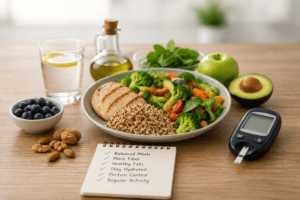
Switch to Complex Carbohydrates: Swap out white bread, white rice, and processed cereals for whole oats, brown rice, and quinoa. These foods break down slowly, preventing a sudden spike in blood sugar.
Focus on Fiber and Protein: Pair your carbs with healthy proteins like pasture-raised eggs, fish, lentils, or a handful of raw almonds. Protein acts like a speed bump, slowing down how fast sugar enters your blood.
Home Habits for Better Insulin Function
Take a 10-Minute Post-Meal Walk: Do not sit down immediately after eating dinner. A short, easy 10-minute walk forces your muscles to absorb glucose directly out of your blood for energy, completely bypassing the need for insulin keys.
Stay Hydrated with Plain Water: Avoid fruit juices and sodas entirely. Drinking plain water helps dilute the sugar in your bloodstream and makes it much easier for your kidneys to filter your system.