The quest for the perfect daily water intake is one of the most heavily searched health topics online. While you have likely heard the classic “8 glasses a day” rule, modern sports science and clinical medicine have moved far beyond this rigid, one-size-fits-all metric.
The reality is that your ideal fluid intake is a shifting target dictated by your biology, your local climate, and your physical output.
1. Deconstructing the “8×8” Myth: What the Guidelines Actually Say
The long-standing advice to drink eight 8-ounce glasses of water daily is a historical oversimplification. Modern health institutions look at total fluid intake—which includes the water content found naturally in your meals, fruits, and daily beverages.
According to comprehensive intake data from the National Academies of Sciences, Engineering, and Medicine (NASEM), the baseline adequate daily fluid intake for healthy adults living in a temperate climate is:
For Men: Approximately 3.7 liters (125 ounces / ~15 cups) of total fluid per day.
For Women: Approximately 2.7 liters (91 ounces / ~11 cups) of total fluid per day.
The 20% Food Rule: You don’t need to chug all of this from a water bottle. Roughly 20% of your daily water intake typically comes from the moisture present in the foods you eat—especially hydrating vegetables like cucumbers or spinach, and fruits like watermelon or citrus. The remaining 80% is covered by clean water and other beverages.
2. Variables That Shift Your Daily Fluid Calculus
Your hydration needs can fluctuate drastically from day to day based on three primary environmental and physiological factors.
Physical Exertion and Sweat Rate
When you exercise, your muscles generate heat, forcing your body to lose water through sweat to maintain a stable core temperature. For every 30 minutes of intense physical activity, you should add roughly 12 to 16 ounces (350 to 450 mL) of water to your baseline intake. If you are training heavily or sweating in high humidity, you also lose vital electrolytes (like sodium and potassium) that must be replaced alongside water to prevent muscle cramping and hyponatremia (critically low blood sodium).
Environmental Temperature
Living or working in hot, humid, or arid conditions causes your body to naturally evaporate water through your skin, even when you aren’t noticeably sweating. Furthermore, high altitudes (above 8,000 feet) accelerate your breathing rate, causing you to lose significant moisture simply through exhalation.
3. The Natural Hydration Bio-Feedback System
Instead of obsessively measuring ounces, you can read your body’s built-in indicators to track your real-time hydration status.
| Diagnostic Indicator | Optimal Hydration | Dehydrated State |
| Urine Color | Pale, translucent straw-yellow. Indicates an ideal balance of water and waste filtration. | Dark amber, honey-colored, or cloudy. A clear signal that your kidneys are conserving water due to a systemic shortage. |
| Thirst Mechanism | Absent or mild during resting periods. | Sharp or persistent. Note: By the time your brain triggers a distinct thirst sensation, your body is already roughly 1% to 2% dehydrated, which can impair cognitive focus and athletic performance. |
| Physical Symptoms | Steady energy, normal skin elasticity, and optimal focus. | Low-grade headaches, dry mouth, mild dizziness, and unexplained afternoon fatigue. |
A Structured Protocol to Build Your Hydration Habit
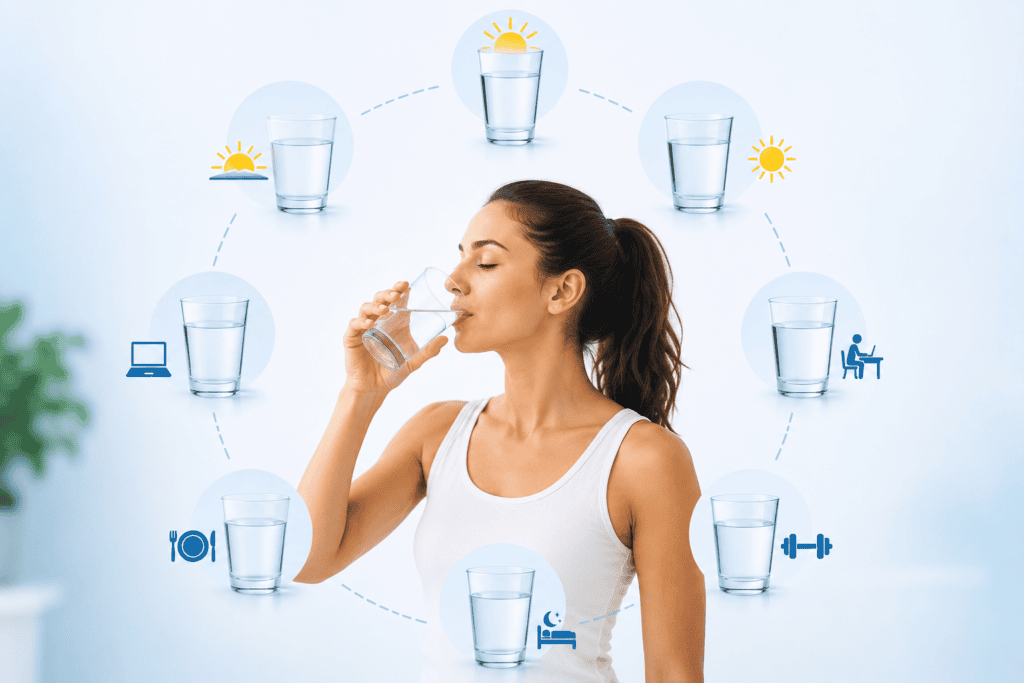
If you struggle to stay consistently hydrated throughout the day, use this simple behavioral sequence to automate your intake.
Drink a full 12 to 16 ounces of water as soon as you get out of bed. Your body loses substantial moisture overnight through respiration; rehydrating immediately wakes up your digestive system and clears morning brain fog.
Keep a reusable water bottle visible on your desk or workspace at all times. Tie drinking water to specific transition moments—such as taking a few sips every time you finish a meeting, check an email batch, or step away from your screen.
Gradually reduce your fluid intake in the late evening. Tapering off your water intake two hours before bed prevents frequent sleep fragmentation caused by middle-of-the-night bathroom trips, preserving your deep sleep stages.