If you drag yourself through the day feeling completely deflated, find yourself gasping for air after walking up a single flight of stairs, or experience frequent dizzy spells, your body might be suffering from a literal shortage of oxygen.
Iron-deficiency anemia is the most common nutritional deficiency in the world. It is a condition where your body lacks the essential raw materials required to produce hemoglobin, a vital protein found inside your red blood cells. Without sufficient hemoglobin, your blood cannot properly transport oxygen from your lungs to the rest of your organs and tissues, leaving your entire body in a state of chronic, suffocating exhaustion.
1. The Cellular Transport System: How Iron Shortages Starve Tissues
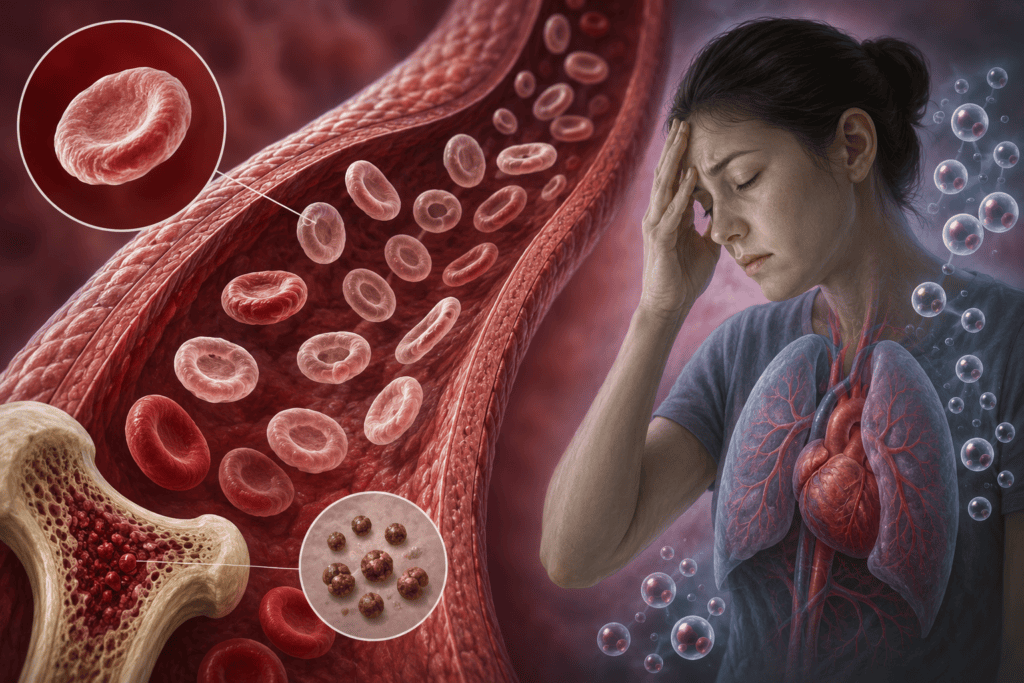
To visualize what happens during anemia, it helps to look at a microscopic comparison of healthy blood versus anemic blood.
In a healthy individual, red blood cells are plump, circular, and packed with iron-rich hemoglobin, giving them a bright red color. In an individual with iron-deficiency anemia, the bone marrow cannot produce normal red blood cells. The cells it does release are:
Microcytic: Abnormally small in size.
Hypochromic: Markedly pale in color due to the lack of oxygen-binding hemoglobin.
Because these malformed cells carry a fraction of the oxygen of a normal cell, your muscles, heart, and brain are consistently starved of the fuel they need to function optimally.
2. What the Global Data Tells Us
Anemia is a massive public health challenge that spans across every global demographic, though it heavily targets specific populations.
The Global Footprint: According to data from the World Health Organization (WHO), anemia affects roughly 30% of women of reproductive age and nearly 40% of children under 5 years old worldwide. Iron deficiency is responsible for at least half of all documented anemia cases.
The Hidden Storage Depletion: Many individuals have a normal count of red blood cells but still suffer from the baseline symptoms of iron deficiency. This occurs when your ferritin levels (your body’s internal iron storage banks) are entirely depleted, but the body hasn’t yet run completely out of circulating iron to build new cells.
The Unusual Symptom: Clinical data highlights that severe iron deficiency often triggers a psychological phenomenon known as pica—a intense, compulsive craving to chew on non-food items, most commonly ice, dirt, or paper.
3. Identifying the Core Warning Signs
While chronic fatigue is the hallmark indicator, iron-deficiency anemia impacts several structural and thermal systems across the body.
| Physical Metric | Healthy Baseline | Anemic Presentation |
| Energy & Respiration | Normal stamina; steady breathing patterns during basic movement. | Profound exhaustion; shortness of breath (dyspnea) during minimal exertion as the heart pumps faster to distribute scarce oxygen. |
| Thermoregulation | Steady, comfortable internal body heat in moderate climates. | Chronic cold intolerance; constantly freezing hands and feet due to poor peripheral circulation. |
| Structural Integrity | Strong, smooth fingernails; healthy, vibrant skin complexion. | Brittle, spoon-shaped nails (koilonychia); a noticeably pale complexion, particularly visible inside the lower eyelids or gums. |
A Recovery Strategy: Rebuilding Your Iron Stores
Fixing iron-deficiency anemia is not as simple as taking a random supplement; it requires an intentional approach to how you source and absorb nutrients.
1.Get a Full Iron and Ferritin Panel:Clinical Evaluation.
Never self-diagnose anemia. Request a comprehensive blood test measuring Serum Iron, Total Iron-Binding Capacity (TIBC), and Ferritin. Your ferritin level is the single most accurate marker of your body’s true long-term iron reserves.
2.Pair Heme and Non-Heme Iron Correctly:Dietary Restructuring.
Incorporate iron-rich foods into your daily meals. Heme iron (found in red meat, poultry, and shellfish) is absorbed highly efficiently by the body. Non-heme iron (found in spinach, legumes, and fortified grains) is harder to absorb.
3.Deploy Vitamin C and Avoid Blockers:Absorption Optimization.
Always consume non-heme iron sources alongside a potent source of Vitamin C (like citrus or red bell peppers), which chemically enhances iron absorption. Crucially, avoid drinking coffee, black tea, or consuming high-calcium dairy within 2 hours of your iron source, as tannins and calcium heavily block iron uptake in the gut.