Receiving a lab report with an elevated A1C can feel incredibly overwhelming. Whether you have recently been diagnosed with prediabetes, are managing type 2 diabetes, or simply noticed your blood sugar creeping upward on a routine health panel, it is easy to assume you are facing a life of severe food restrictions and medical dependency.
The truth is much more encouraging. Your A1C is not a permanent grade—it is a fluid, historical record of your blood chemistry. By understanding the metabolic math behind this number, you can take deliberate, science-backed steps to reset your insulin sensitivity and pull your blood sugar back into a healthy, safe range.
1. Demystifying the A1C: What This Number Actually Means
To lower your A1C, you first need to understand exactly what your doctor is measuring. Unlike a standard finger-prick or continuous glucose monitor that tells you your blood sugar at that exact second, the A1C test looks backward in time.
Inside your body, red blood cells circulate constantly, carrying oxygen. Glucose (sugar) in your bloodstream naturally sticks to a protein inside these cells called hemoglobin. This sticking process is called glycation.
Because a red blood cell has an average lifespan of roughly 90 to 120 days (3 months), measuring the percentage of glycated hemoglobin gives doctors a flawless, weighted average of your blood sugar levels over the past 8 to 12 weeks. If your bloodstream has been crowded with excess sugar over the last few months, your A1C percentage will reflect that exposure.
2. Reading Your Metabolic Dashboard: The Clinical Ranges
According to diagnostic data established by the American Diabetes Association (ADA), A1C percentages fall into three distinct metabolic zones:
| A1C Percentage | Health Classification | What is Happening Inside Your Body |
| Below 5.7% | Normal / Healthy | Your cells are highly insulin-sensitive, efficiently pulling sugar out of your blood and using it for clean cellular energy. |
| 5.7% to 6.4% | Prediabetes | Your body is showing early signs of insulin resistance. Your pancreas is working overtime to pump out insulin, but sugar is beginning to linger in the bloodstream. |
| 6.5% or Higher | Diabetes | Chronic insulin resistance has set in. Blood sugar levels are persistently elevated, requiring active lifestyle and medical intervention to prevent vascular damage. |
The Power of One Percent: Clinical data from the landmark UK Prospective Diabetes Study demonstrates that dropping your A1C by just 1 percentage point reduces your risk of microvascular complications (like kidney disease or nerve damage) by an astonishing 37% and slashes diabetes-related mortality risks by 21%. Every single decimal point down counts.
3. The Core Pillars of Reversing High Blood Sugar
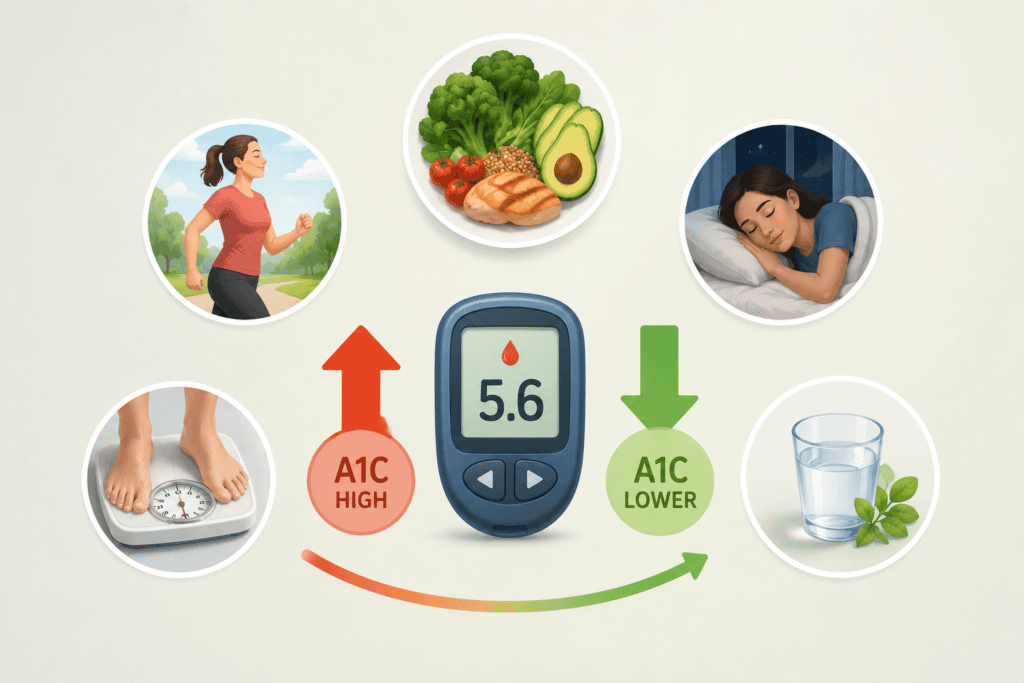
Lowering your A1C permanently requires a combined strategy that limits incoming sugar while maximizing your body’s ability to burn off existing glucose.
Phase Out Ultra-Processed Carbs (The Glycemic Shift)
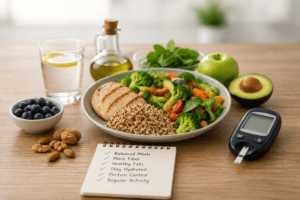
You do not need to cut out every single carbohydrate to lower your A1C. Instead, swap out simple, refined carbohydrates (like white bread, sugary sodas, white rice, and boxed pastries) for complex, high-fiber alternatives (like lentils, quinoa, avocados, and non-starchy vegetables).
Fiber acts as a natural speed bump in your digestive tract. It slows down the absorption of sugar into your bloodstream, preventing the sharp, aggressive insulin spikes that exhaust your pancreas and worsen insulin resistance.
Leverage Muscle Contraction (The Glucose Sink)
Your skeletal muscles are the primary storage centers for circulating blood glucose. When you exercise, your muscles pull glucose directly out of your bloodstream to use for fuel—completely independent of insulin.
According to sports medicine research, a combination of moderate cardiovascular exercise (like a brisk walk) and resistance training (like bodyweight squats or lifting weights) dramatically improves cellular insulin sensitivity for up to 48 hours post-workout.
Your Step-by-Step A1C Reduction Blueprint
Because your red blood cells live for three months, it takes a full 90 days of consistent behavioral changes to see a radical shift in your next lab panel.
Never eat “naked” or isolated carbohydrates. Whenever you consume carbs, always pair them with a clean protein source (like chicken, eggs, or tofu) and a healthy fat or fiber source. This simple pairing radically dampens the glycemic impact of your meal, stabilizing your daily blood sugar curves.
Commit to a simple, 10-to-15-minute brisk walk immediately after your largest meals of the day. Clinical trials show that moving your muscles directly after eating captures the initial digestive sugar spike before it can flood your system, dropping your daily average glucose effortlessly.
At the 90-day mark, schedule a follow-up blood test with your healthcare provider to check your new baseline. Use this data to fine-tune your nutrition or evaluate if any medical adjustments are needed to keep your metabolism on track.